
Best of the Week // What’s Red and Black and Atoning for its Past?
Welcome, dear readers, to another week of comics and commentary at Comics! The Blog! We kick things off, as always, by handing out awards for the Best of the Week – beginning with twoAward postings, followed closely by the past week’s Best.

Hopefully, this lasts longer than the last one.
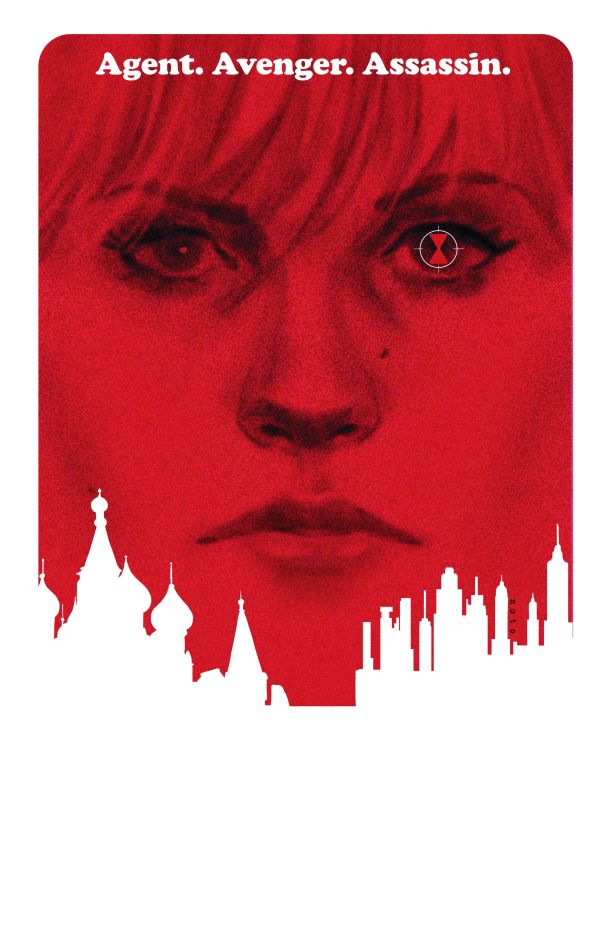
Being a fan of superhero or mainstream comics is an interesting venture, because while there’s a lot of great stuff - and there’s now more great stuff than ever - it can be hard sometimes to ignore disparities around gender, race and sexuality. Marvel has been putting out a veritable wealth of great comics for a while, but few of their series, especially solo ones, have starred women or people of colour. Marvel’s standard response, via Tom Brevoort, is often that they would like to publish more of those books, they have to go with what sells, and encourage readers to buy books lest they suffer the same fate as Marjorie Liu‘s quickly-canceled Black Widow series a few years ago. And those responses make sense, to an extent; it’s understandable why a publisher wouldn’t stick with something that doesn’t work.
But at the same time, that doesn’t hold up to scrutiny anymore. Part of the responsibility of any publisher, but especially a major one, is providing its audience with something they didn’t know they wanted and convincing them that they do. There’s an avenue for Marvel to be a progressive leader in its industry and still make a bunch of money. And to their credit, it seems like the company might be using its All New Marvel NOW! initiative to do just that, featuring several series starring heroes outside of the straight white male mold, and first among them was last week’s Black Widow #1, from Nathan Edmondson and Phil Noto.
It’s a team that, judging from their first issue, could live up to their promise. Edmondson told a riveting action/espionage story recently with Dancer, and it’s easy to see some of the hallmarks of that book’s success in Black Widow, like his ruthless pacing and how the script dares the reader to try to read into its hero while still keeping them at a distance. This is a natural fit for Noto, who uses elegiac staging and bursts of close-up violence to maximize the effect of the action and play it a visual representation of Natasha’s skills. The issue’s narration frames her as a predator, and that’s what we see here: a calm, impassive face with flickers of deeper emotions, a coiled body ready to strike at a moment’s notice. Visually, the book is exciting to read, but it also has that picturesque quality of Noto‘s art series on the candid observed moments of Marvel heroes; viewed through a lens, a hard-to-describe barrier firmly in place. Of course, it’s all deliberate, a narrative device invoked by Natasha herself. An exercise of power, a statement of purpose: her life and her mission are her own.
Her mission, of course, is intensely personal, as she reminds her handler/manager. She spent a lot of her life being a tool for others, and she’s going to even the scales, if she can, through this atonement. This is a nifty premise for the series. On one hand, it does what Hawkguy‘s premise does; it consciously separates these issues and missions from her work with the Avengers. Like how Noto‘s art creates that emotional separation, the premise spreads that theme through the rest of the book. As an operative, Black Widow is used to compartmentalization, so all this feels natural. Second, the “missions of atonement” premise not only lends the book its throughline, but could give it an easy-to-jump-on structure. Issue #1 doesn’t feature the shadowy introduction of a big bad, or a mission by Natasha to reclaim the memories taken from her by one of the Winter Soldier’s enemies. It’s a mission, and a promise of more to come. You don’t need to know anything about Natasha yet that’s not right there on the page, and as one of the first All New Marvel NOW! titles, that ability to be handed to someone without having to explain decades of comics continuity is very important.
And yes, it’s part of Marvel’s deliberate attempts to broaden the demographics of its line to better reflect that of its readers, and attract even more growth. It’s a savvy move, just like Ms. Marvel, She-Hulk, Loki: Agent of Asgard or All New Ultimates. It’s also good comics, and hopefully these factors will be enough to keep this book going strong. It’s certainly earned its shot, and everybody benefits from it doing well. The paradox of Natasha’s efforts to keep people at bay will hopefully be that she’ll draw in even more people. If nothing else, it wins this week’s Come Together Award.


 James Leask says:
I could lie and say I didn't make a point of...
James Leask says:
I could lie and say I didn't make a point of...
 Scotto says:
There were times before his Spider-Man work when I wasn't hot...
Scotto says:
There were times before his Spider-Man work when I wasn't hot...
 » Image is everything… The Daily Rios says:
[…] comicstheblog.com/2014/01/10/white-people-and-the-image-expo by Brandon Schatz (Jan.10th) […]
» Image is everything… The Daily Rios says:
[…] comicstheblog.com/2014/01/10/white-people-and-the-image-expo by Brandon Schatz (Jan.10th) […]