
Best of the Week // We Liked Umbral And Do Not Have Any Jokes About It
Welcome, dear readers, to another week of comics and commentary at Comics! The Blog! We kick things off, as always, by handing out awards for the Best of the Week – beginning with twoAward postings, followed closely by the past week’s Best.

Hey, did you know that Antony Johnston and Chris Mitten are still a really great comic book-making team? That Umbral #1 was no fluke? Oh, you did? This isn’t surprising at all, the book is just a pure delight? Huh, I guess I should get to it, then.
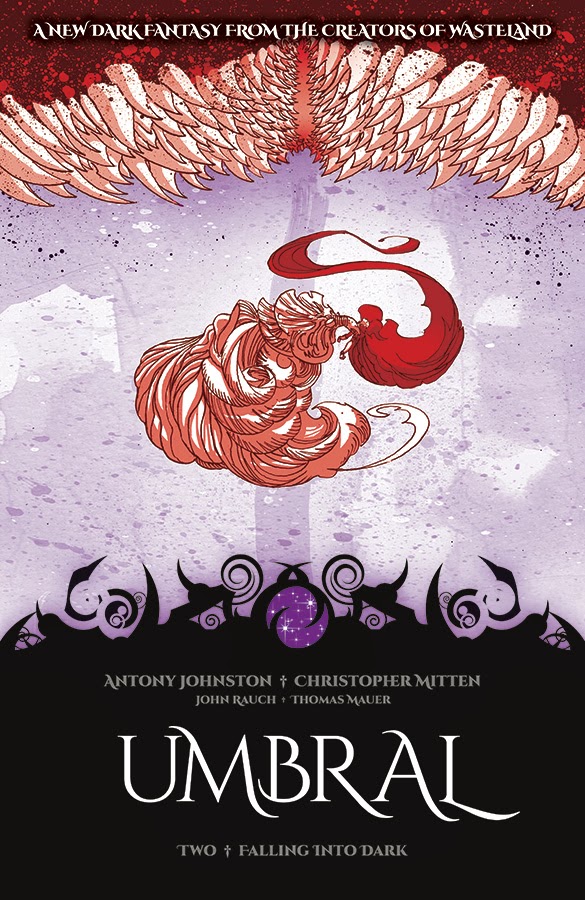
The first issue of Umbral hit a lot of the sweet spots for what I want from a dark fantasy story. It established a big world of traditions, royalty and all-threatening dark magic. It sold the stakes of the book and of Rascal, its lead character, superbly. And honestly, the second issue could have been basically the same thing and it would have been worth every cent, but what Johnston, Mitten and John Rauch did with Issue #2 was even smarter: they pulled back from the immediate threat of dark magic and refocused the issue on smaller issues of the world, like class and prejudice.
A big part of the issue, after Rascal uses her ingenuity (and luck) to escape from the Umbral, is an extended chase scene where she’s paired with another ne’er-do-well. Not only is it visually exciting thanks to Mitten and Rauch, and not only does it establish that tried-and-true Odd Couple partnership, but it builds the overall world by bringing in heady issues of class and prejudice into Umbral. It’s a brilliant choice because a world can’t just be all about dark magic and high stakes; you have to believe it’s real enough (or at least could be) that you care about the goings on, and prejudice can in many ways be the opposite of a giant world-threatening calamity. Prejudicial mistrust isn’t going to take you to a dark realm and steal your soul, but Johnston shows how a helpful stranger can turn into someone you’re irrationally uncomfortable around when you discover something about them you’ve been taught to fear. Similarly, while thieves and rogues are well-known fantasy tropes, it’s relatively rare to hear one get offended by assumptions about their intelligence and poorer upbringing. Johnston is wise to couch it all in language that’s colloquial and oriented towards daily life, because that’s where the lived experience is, and it makes Umbral‘s world, only two issues in, feel very complete. We’ve seen the big stuff and we’ve gotten information about how society operates on a small level.
Of course, all this fine detail is still being brought to life by Mitten and Rauch, so there’s always a level of grandeur to it. Johnston has described a lot of the genesis of the book as asking Mitten what he wants to draw, and with Rauch‘s colours, the book, even in its small moments, still looks lush and gorgeous. In a chapter titled “Falling Into Dark,” notice how the two use shadow and space to give a sense of encroaching dread, and how big and hopeless things feel even when Rascal and her compatriot have ostensibly escaped. That mood fills the whole issue and feeds into the final page reveal, giving it a brilliant punch. Through how they direct attention in these stifling spaces, the book’s team imbues the book with a sense of hopelessness, which will make overcoming the odds all the more rewarding down the line.


 Scotto says:
There were times before his Spider-Man work when I wasn't hot...
Scotto says:
There were times before his Spider-Man work when I wasn't hot...
 » Image is everything… The Daily Rios says:
[…] comicstheblog.com/2014/01/10/white-people-and-the-image-expo by Brandon Schatz (Jan.10th) […]
» Image is everything… The Daily Rios says:
[…] comicstheblog.com/2014/01/10/white-people-and-the-image-expo by Brandon Schatz (Jan.10th) […]