

[After the “noted” “success” of our LOST rewatch two years ago, James and Scott are back to prepare for the release of Avengers: Age of Ultron the only way they know how: by going through the entire Marvel Cinematic Universe, movie by movie. We are not very imaginative. Check in every week as we go into way too much detail about pop entertainment and frequently say people are wrong about things.]
Scott: Well let’s get on with the show then because we’ve got a really great movie to talk about this week!
James: It’s true! I think we have, overall, talked pretty favourably about the MCU to date, but tonight there’s a treat: we get to discuss what’s arguably the best movie in it to date: CAPTAIN AMERICA: THE WINTER SOLDIER!
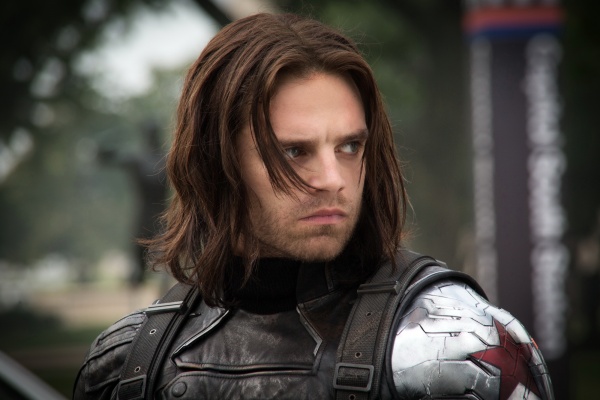
Scott: Absolutely. And this is probably the first MCU film in, like, FOREVER, that everyone was right about: the MCU movies, despite as a unit being a big deal, tend to individually be underrated, except for MARVEL’S THE AVENGERS, which is of course way way overrated. CAPTAIN AMERICA: THE WINTER SOLDIER was touted at the time of release as being potentially the best yet, and while you could make an argument for any number of these films, it certainly does live up to that tag! Then of course another movie came along months later to steal its thunder and almost completely erase it from peoples’ memories, but that’s for another week.
James: It and GUARDIANS OF THE GALAXY are two very different types of movie, which is interesting; Phase 2 is, overall, more open to “quirky” directorial voice than Phase 1 was, I think. Now, Anthony and Joe Russo don’t have the same auteur-esque voice as Shane Black or James Gunn, but they wanted to make a weird 70s espionage superhero joint, and Marvel Studios let them.
Scott: It’s true that the Russos don’t seem to be asserting any authorial voice here: they’re best known as the directors of TV comedies like COMMUNITY, but aside from a Danny Pudi cameo (perhaps as his COUGAR TOWN background character, if you like to think so) this movie is played quite straight, and very effectively so.
James: You know who ELSE directed episodes of COMMUNITY and turned that into a distinguished film career? Justin Lin.
Scott: It must come from the demands of Dan Harmon to get directors who will play nearly every aspect of his genre experiments as straight as possible. Or, you know, these guys just generally being top notch talents.
James: I think there’s definitely SOME authorial voice in WINTER SOLDIER, but it’s definitely more subtle than Shane Black basically making the superhero version of KISS KISS BANG BANG; you can tell that the Russos wanted to do what they wanted to do and Marvel supported that, even if they didn’t go into Edgar Wright territory with it. They very clearly wanted to do something like THREE DAYS OF THE CONDOR and they did!
Scott: Not only that, but it also manages to incorporate a lot of great post-9/11 themes and modern action-thriller filmmaking in the BOURNE/Craig-007 mold. It simultaneously feels like a throwback and a very modern statement.
James: Even more, it manages to dip its toes into the Bourne-Bond-9/11 themes while not sacrificing what the first Cap movie established about the character. And with that, shall we actually get into the events of the movie?
Scott: In fact, not sacrificing that character is exactly what the movie is explicitly about! And yet, we begin on an average morning in Washington DC where Army Vet Sam Wilson is getting in a nice morning jog… I actually really love this little opening scene with Cap and the Falcon, even before they get into their bro-establishing conversation. “On your left… on your left…”
James: It’s really great! It introduces the rapport between Sam and Steve, gives background on their similarities as soldiers struggling to adjust to civilian life, and it centres the movie in Cap’s civilian life and desire for normalcy. I think that’s a really important thing for the movie to do, since the first movie was all about Steve as a soldier and we, the audience, don’t really know who he is outside of a war situation yet. Sam as this guy who is impressed by Steve’s abilities but also totally sees him as a fellow soldier and not something distant is extremely important, as is Steve’s list of things he wants to make sure he gets caught up on from the 70 years he missed.
Scott: And AVENGERS did a shit job situating Rogers in the present, so Steve’s little rundown about the present is a handy bit of character-building too: “Food’s a lot better, we used to boil everything. Internet, so helpful, been reading that a lot.” Plus according to his list at some point somebody recommended Nirvana to him! Who is having a conversation with Captain America and thinking that’s what he’ll connect with?
James: That list is one of the single most important bits of characterization Steve gets, I think. It’s up there with, “I just don’t like bullies.”
Scott: The moment when Sam asks, “It’s your bed, isn’t it? Too soft.” You completely see why these two guys bond, in like one line.
[James: I think it’s easy to think of Steve as a man out of time, an old-fashioned guy who’d be confused by the present (see: The Ultimates), but that’s not what I see him as. He’s a guy who represented the best of mankind in the 40s, and those qualities are still what’s best about us today. He’s honest, he’s loyal and he’s CURIOUS. Him being really fascinated with all this stuff he missed is this nice little detail that says, “No, he’s a modern man.”
Scott: The temptation is to see Steve as permanently out of time, but he was a young man when he was frozen, and a sharp, inquisitive guy. He likes the future! It’s intimidating, but he doesn’t back down from a challenge.
James: Cap is who we can be in the FUTURE, if we try.
Scott: And again, the timelessness of Cap’s values are the essential truth of this movie. Lesser movies with classical “good guy” protagonists have a hard time trying to lean away from it (I think you know which ones I mean) but both CAP movies get right out in front of it and the results are amazing. Before long, Cap is collected for his latest SHIELD mission with Black Widow and STIRKE team leader Brock Rumlow. A SHIELD spy boat has been hijacked by a Canadian MMA fighter! I mean an Algerian pirate. Same difference. And I swear, if you had told me before this movie that I’d get to see BATROC ZE LEAPER on the big screen and that he would be amazing, I would have smacked your liar face.
James: Right off the bat, Steve is uncomfortable with the mission, as he immediately susses out that SHIELD was illegally spying in foreign waters. But people in trouble are people in trouble, and me puts his discomfort aside to help.
Scott: This is the first of several amazing action scenes in the movie, with Cap wrecking pirates left, right and center. The Russos have a great sense for ways to showcase Cap’s abilities that mark him above the average man but not exactly a human ping pong ball.
James: And one thing they very smartly do is that they show Cap taking out these pirates non-lethally. As we know from THE FIRST AVENGER, if not MARVEL’S THE AVENGERS, Steve doesn’t want to kill anyone.
Scott: Yes. He doesn’t exactly give them a slap on the wrists, but all he needs to do is incapacitate them to the appropriate degree. Cap is a soldier, but not a killer.
James: Brock Rumlow, however, has no such qualms; while Cap is silently and non lethally incapacitating the pirates on the main deck and going after Batroc Ze Leepairrrr, the STRIKE team is saving the hostages using firmer methods. The Cap/Batroc fight is interesting and really fun to watch; The Russos don’t have a completely distinct visual style, but they work with camera pans really well to follow the action horizontally.
Scott: It’s shot a bit like a STREET FIGHTER fight, which is not a criticism.
James: I was gonna say that!
My only fault with it is that Cap does not suplex Batroc. However, it does have Batroc challenging Cap to a fair fight without the shield, and Cap being amused enough that he sets down his shield and helmet, and then just WRECKS the pirate.
Scott: Look, Georges St.-Pierre looks great as Batroc, but you know that hand-to-hand he doesn’t have a prayer against Cap here. Cap’s just being a standup dude by not KO’ing him immediately.
James: I think it’s easy, with the Bourne style of movies, to lose the coherence in the action shots with quick cuts; the Russos keep a bit of distance and use longer shots, which keeps it both coherent and being very reminiscent of those 70s movies.
Scott: Ultimately, the team dispatches the pirates and saves the hostages, while Natasha, unbeknownst to Cap, has her own mission: back up the harddrive!
James: This instigates two important conversations in this scene and the next. First, Cap criticizes Natasha for secretly having her own mission and she’s very blasé about it, sowing a bit of distrust that will come into play later. Second, Cap just UNLOADS on Nick Fury when he’s back at the Triskelion, SHIELD’s DC HQ, and this is where the main ideological line in the movie is drawn: Fury tells a story about his grandpa keeping a gun to scare off neighbourhood thugs, because while he liked people, “he didn’t trust them very much.” Cap, on the other hand, criticizes Nick’s secret-keeping on missions and, when Nick shows him his new project, three helicarriers that can identify potential threats and neutralize them before they happen, Steve FREAKS THE HELL OUT.
Scott: I love these scenes between Cap and Fury, when Fury boasts that the new Insight project Hellicarriers can “neutralize a lot of threats before they happen” and Cap reminds his superior that you’re supposed to wait until after a crime has been committed to punish it.
James: Steve immediately recognizes that punishing crimes before they occur is not only contrary to the justice system, but that Nick is talking about “holding a gun to the world’s head and calling it protection.” Steve counters that with the idea that “this isn’t freedom, it’s fear,” which is honestly a pretty revolutionary thesis for an action movie to have these days.
Scott: Fury is the pragmatic spy who “takes the world as it is,” and Cap is the soldier who is hella-not-okay with mortgaging the values he fights for just for a sham peace.
James: That one line establishes this as a POLITICAL movie, and one with a rather anti-American-foreign-policy one that I remember hoping the movie would have but doubted Disney would actually let be in the final cut.
Scott: Cap is 100% in the right here, and the movie is not shy about that, but it smartly doesn’t set Fury up as a strawman - as you said, in other movies his POV would be the protagonists, and Cap’s would be seen as naive.
James: Yeah, that’s key; Fury’s point is valid, and definitely tempting. Steve just disagrees with it and is refusing to compromise. It’s interesting that this is an idea that was brought up in AVENGERS but was left by the wayside. Here, screenwriters Christopher Markus and Stephen McFeely make it the focal point of the movie.
Scott: Let’s not beat around the bush here: SHIELD wants to put up a bunch of Death Stars that can auto-kill anyone it wants to after using arcane computer logistics to determine them as a “threat.” That can’t possibly go well. I like how nakedly ideological this conversation is, quite honestly. It risks coming off as clunky, but the dialogue is actually pretty snappy and concise.
James: It works because AVENGERS basically exists to set up Fury’s viewpoint, and we’ve had an entire movie about how Steve doesn’t compromise his morals. Fury tells Steve to get with the program, and Steve tells him not to hold his breath. None of this is coming out of the blue; this movie just, very smartly, picks up from where its predecessors left off. It also helps that neither Steve nor Nick brushes it off; Nick discovers a security glitch with his authorization that could suggest Project Insight is compromised, and goes to his old friend, World Security Council member Robert Redford. And I mean, if you’re gonna make a 70s espionage movie, no matter what decade it actually is, you get Robert Redford.
Scott: As an elder statesman of these types of movies, Robert Redford lends a lot of gravitas to this film. And for some reason I get a chill every time he says “Bogota.”
James: Fury convinces Redford to make an argument to the Council to hold off on Project Insight, and it’s hard not to think that his conversation with Steve didn’t have a part to play with this. Meanwhile, Steve is feeling unsure of where he fits into this new military, and goes to two people to try to work it out. Not only does he check in with his new friend Sam at the VA, but he also visits his best girl Peggy Carter, now a senior citizen, to confess his confusion. And man, this scene is some rough chuckles.
Scott: Mhm, quite a tug at the heartstrings. The moments this movie chooses to play up Cap’s time on ice are very effective.
James: Steve’s confession is met with earnest, knowing support from Peggy, but just as soon as that happens, her moment of lucidity is over and she doesn’t remember it happening. Steve is, for a moment, truly alone. It’s nice that Steve goes from here to see Sam, and immediately gets some balm; the Peggy scene is important to tear away Steve’s last tie to his past, but the movie isn’t interested in glum and mopey Steve.
Scott: Just to kick Steve a little harder before that, he visits the Smithsonian exhibit (turns out Natasha wasn’t just being snarky!) and we get a reminder that James Buchanan “Named After the Actual Worst President in History” Barnes was the only Howling Commando lost in action.
I loved seeing Sam’s work at the VA: showing his insight into the soldier’s condition as well as being the person Steve turns to for a little advice helps establish his character as 3-dimensional and not just Cap’s sidekick.
James: One thing this movie does consistently well is give the supporting protagonists - Sam, Natasha, Fury - characterization that made me interested in them. This scene made me believe that Sam Wilson could carry his own movie, and Natasha’s later scenes with Steve did more for me than any of her sad-about-Hawkeye scenes in AVENGERS.
Scott: Fury has been in a whole bunch of movies so far, and this is the first time he’s felt like a character with his own ideas and motivations.
James: It’s the first movie where he’s not getting a team together!
Scott: But sadly, since he’s been sniffing around about the possible corruption of the Insight project, he finds himself on the business end of a rather bold daylight attack while out for a drive in his Supercar.
James: That scene is a good example of your point about him being a more interesting, fuller character here. There’s this moment, when the fake cops pull up next to him and start eyeing him in his fancy SUV, where he wearily asks them, “Wanna see my lease?” And that little moment does more for the character of Fury than any appearance so far; all of a sudden, he’s a guy with a PAST, and an acrimonious, implied-to-be-racially-motivated one with law enforcement, too! It’s not really followed up on at all, in this movie at least, but that one little detail of a line does so much.
Scott: That, combined with the elevator monologue earlier and his shared history with Redford, all add up to a really thoroughly-realized character (in this movie.)
James: It turns out I like this version of Fury, even if I don’t always agree with him. That was a nice development, coming after his last appearance.
Scott: The attempt on Fury’s life is, let’s just say it, Fast and Furious - and it looks like Nick has a chance of getting out alive, until the appearance of a mysterious shaggy-haired dude with a robot arm.
James: The Winter Soldier’s first appearance is brief and to-the-point: what a dozen presumably highly trained operatives couldn’t do to Fury, the Winter Soldier comes closest to, as Fury narrowly escapes into the sewers.
Scott: TWS makes such a fucking cool bad guy. And unlike, say, Boba Fett, he’s actually good at his job!
James: Ugh, Boba Fett.
Meanwhile, Cap arrives home and, at Natasha’s earlier suggestion, flirts with his neighbour, EVERWOOD’s Emily VanCamp, who seems intrigued but has to go; she lets Steve know that he left his stereo on, and a confused Steve sneaks into his apartment expecting an intruder and finding an injured Nick Fury.
Scott: I like the running thread about Black Widow attempting to hook Cap up. It’s one of the movie’s main threads of comedy, and it’s built around reaffirming Natasha as one of the few people who relate to Steve as a person - they make a fun odd couple through this.
James: It’s a nice little thread that doesn’t dip at all into romantic territory; Natasha isn’t trying to set Cap up with Sharon to deflect from some deep down desire of her own for him. She just wants to get her pal laid!
Scott: I ALSO really like the scene between Fury and Cap. “Does anyone else know about your ‘wife’?” “Just my friends.” “Is that what we are?” Good spy talk dialogue that is interrupted by a reappearance of The Winter Soldier and the revelation that Emily VanCamp is ALSO a spy! TWS escapes pursuit from Cap, and Fury is taken to the hospital where he flatlines in front of Steve, Natasha, and Maria Hill’s very eyes.
James: Fury’s last words to Steve - as he hands him the encrypted USB that tipped off his conversation with Redford earlier - are, “Don’t trust anyone,” and a nice little detail here is that Steve doesn’t immediately trust Natasha with that information when she asks him about it following Fury flatlining. She calls him on his lie, but lets it lie for now, and this entire scene is informed by their earlier interaction on the SHIELD ship, where Natasha abused Steve’s trust. That mistrust continues in the next scene, where Redford (I suppose we should acknowledge his character’s name is Alexander Pierce) calls in Steve to ask him about Fury’s visit to him, because the evidence suggests that Fury was a traitor. Steve doesn’t believe that, and Pierce says he doesn’t either, but Steve still follows Fury’s instructions and withholds the information about the USB drive.
Scott: This brands Cap as an enemy of SHIELD, conveniently for people who want a reason to sow suspicion.
James: And what can only be a coincidence, Steve is immediately attacked by Brock Rumlow, the STRIKE team and a few other burly men in the Triskelion elevator.
Scott: “Before we start, does anyone wanna get off?”
James: That’s such a great Steve moment! He’ll kick your ass, but he’ll be polite about it and give you a place to back out, first. The elevator fight was a big part of the previews for the movie, and justifiably so; it’s a brutal, smart scene.
Scott: It’s well-shot and tense, one of the signature scenes in a movie with about a half-dozen well-done action sequences. Steve, now officially an enemy of SHIELD, fights his way out of a cramped elevator with like nine guys, gets to the garage where he swipes an Americycle, and uses his shield to handily take down a Quinjet.
James: Stabbing a Quinjet with a shield is one of the more dope action spots in the MCU, up there with Heimdall stabbing a Dark Elf ship in THOR 2.
Scott: Cap returns to the hospital, where he hid the USB stick, only to find it’s already been retrieved by Black Widow, who gains Steve’s trust by telling him what she knows about the Winter Soldier… mainly that he exists.
James: The scene features a great comedy spot, where Cap goes to the vending machine in which he hid the SHIELD USB drive behind some Hubba Bubba - not a great plan, which ties into the idea of Cap as not a great liar or spy - sees it’s missing and the camera pans over to a nonchalant Natasha blowing a bubble with her gum.
Scott: Tasha is pretty great in this.
James: It also begins the thawing of tensions between Steve and Natasha, as she shares a bit of her past with him and he teases her a bit.
Scott: [She indicates entrance wounds from her previous TWS encounter] “Bye bye bikinis.” “Yeah, I bet you look horrible in ’em now.” Playful non-sexual chemistry!
It’s worth noting that, all through this movie, Cap is quipping left and right and yet it never seems out of character - contrary to the popular perception of him as a humorless fogey.
James: Solo movie Cap is legit one of my favourite superheroes.
Scott: And it only gets better as he exhibits his honestly dorky charm when Natasha takes him to a mall to decode the USB stick to evade STRIKE and uncover the source of the conspiracy.
[Hiding from STRIKE] “Kiss me… public displays of affection make people uncomfortable.” “Yes, they do!”
James: “Was that your first kiss since 1945?”
“I’m 95, I’m not dead.”
Scott: “Where’d you learn how to steal cars?” “Nazi Germany… and we’re borrowing, not stealing, feet off the dashboard.”
James: Using an Apple Store MacBook to decode something that SHIELD couldn’t stretches credulity a bit, but it’s a charming scene, partially due to DC Pierson as an employee who openly admires Steve’s body. It’s also just fun to see Steve and Natasha palling around and avoiding the STRIKE TEAM - all sporting fresh bruises from Steve’s elevator beatdown, in a nice bit of visual continuity.
But Steve and Natasha decode the drive to discover a signal coming from a place in New Jersey that’s familiar to Steve, and in addition to the feet-on-the-dashboard exchange, the drive also gives them a nice chance to have their most personal conversation yet, as Steve tries to push deep down into who Nat is at her core, and get past her defences. She tries to evade by talking about how the truth is relative and whatever you want it to be, something Steve wholeheartedly disagrees with.
“Who are you, really?”
“Who do you want me to be?”
“A friend.”
“There’s a chance you might be in the wrong business, Rogers.”
Scott: Since it looks unlikely Natasha will get her own movie, this might be the best exploration of her character that we get. It could have pushed even harder in that direction, but there’s only so much you can do in a 2 hour 15 minute movie. In Jersey, they discover the secret bunker where SHIELD was originally Headquartered, which hides an even secret-er bunker with a bunch of old computer equipment with reels of magnetic tape and stuff!
James: A nice detail is that SHIELD started in a secret bunker in the same place Steve did: Camp Lehigh, where he had his basic training.
Scott: Turns out Toby Jones’ Nazi Scientist Arnim Zola took Tommy Lee Jones up on his offer to defect, then died of cancer at some point, but was kept alive through the magic of technology. And not only that, but Hydra has been alive and well, operating within SHIELD since its inception! The scene with Zola is a classic “villain exposition” scene that is kind of handwaved by saying Zola was really just stalling so that STRIKE could find them and attack, but it’s also vital to the movie’s plot. It explains Hydra’s goals of, basically, tricking humankind into surrendering its freedom! Hydra: Keeping the “Super” in Supervillainy.
James: More than that, It has apparently had repercussions throughout the entire MCU; I don’t watch AGENTS OF SHIELD, but I’m told that the reveal in WINTER SOLDIER, that Hydra has infiltrated and compromised SHIELD and the highest echelons of the US government, has been very important for it. It’s actually one of the more important scenes in the entire MCU in that way!
Scott: I would assume so, yes!
James: It also gives Zola a convenient way to return, despite him being apparently blown up with the bunker; after all, if he’s just a computer program, he could presumably have been backed up elsewhere, or even on a flash drive.
Scott: Exactly. I wouldn’t bat an eyelash if they wanted to write him into CIVIL WAR, but they also don’t have to feel obligated to do so. That said, Jones is so gloriously hammy, especially in Computer form, that while the shock value might be diminished, it adds colour to the MCU landscape to have him alive and kicking around..
James: But Cap and Natasha survive the explosion and make their way to the only safe place Cap can think of: Sam’s apartment. And despite the fact that Sam keeps condiments that are CLEARLY marked as to be refrigerated after opening ON TOP of his fridge, he’s still a trustworthy guy.
“Everyone we know is trying to kill us.”
Scott: Sam volunteers to help dismantle Hydra without a second thought, and when Cap points out that Sam’s soldier days are over, he replies, “Dude, Captain America needs my help.”
James: Sam’s a great companion for Cap like that; he supports him immediately, with an earnestness that balances Natasha’s edge. I also like Sam’s teasing of Steve and Natasha’s superheroic personas when he facetiously asks if they eat like regular people.
Scott: Meanwhile, Alexander Pierce confers with The Winter Soldier over a late-night snack in a scene that mainly serves to confirm us that Pierce is not such a great guy. I honestly can’t remember, from the first time I saw this, if it seemed like Pierce turning out to be the bad guy was played like a twist. But in what absolutely did not feel like a twist, Senator Garry Shandling is ALSO a bad guy, adding a fun dimension to his role in IRON MAN 2. As is Agent Jasper Sitwell, last seen as a hostage on the Lemurian Star, now being triple-interrogated by Cap, Widow, and the impressively-revealed Falcon.
And y’know, in comics, where two out of every three people can fly, Falcon never seems like a big deal for his powers. And yet even in a world like the MCU where Iron Man still exists, Falcon’s flight suit comes off as really cool!
James: I like the reveal because Steve and Natasha are clearly impressed and surprised by it, since they assumed Sam was a pilot. And honestly, even knowing going into the movie that Sam has a flight suit, I still assumed with the setup given that he flew planes and would get a NEW bit of tech, the flight suit. Finding out that he’s basically been a superhero for his entire military career is a pleasant surprise.
I also like how Sitwell is immediately unimpressed by Cap’s threats, because, well, he’s a good guy and so of course he doesn’t kill people. It’s that consistency that the movie nails so well; if you make two movies all about how Steve Rogers is a nice guy, it would feel off if you didn’t have the villains know it. It would have felt disingenuous to me if Sitwell, a guy whose entire deal is that he’s a super smart secret Hydra dude, thought that Cap was going to kill him.
Scott: You’re absolutely right, and the way that’s addressed is pretty slick. It must be, because he IMMEDIATELY spills the beans about what Hydra is gonna do with the Insight ‘carriers.
James: It makes sense that Sitwell would give up the goods after being thrown off a building, even if he’s saved. From the safety of the cheap seats, it’s easy to say, “Doesn’t this just prove that they won’t kill him?” But the sequence still introduces the idea of physical risk (by virtue of a potential accident). Besides, a desk jockey nerd like Sitwell? The adrenaline and fear from being thrown off a building is bound to shake him up. Plus, he also presumably knows about Natasha and her history.
Scott: Exactly. Steve might not be a killer, but Natasha totally is.
James: So Sitwell fills them in: Cap’s worst nightmare about Project Insight is basically true, as Hydra plans to wipe out anyone who disagrees with them, or even might potentially be in the future. Fear masquerading as freedom. It’s a nice tough that Steve and Red Skull’s fundamental disagreement about mankind is still maintained in the Steve/Hydra conflict in WINTER SOLDIER.
Speaking of, guess who shows up to try to kill them all while they’re driving and get rid of Sitwell!
Scott: It ain’t Stilt Man! The Winter Soldier arrives on the scene and a sprawling traffic-based fight scene ensues, built around the first Cap-Winter Soldier matchup. This movie really takes advantage of Cap being more grounded and hand-to-hand oriented than IRON MAN or THOR, but still beyond normal jabronies like STRIKE and Batroc. But in The Winter Soldier, he has his own genetically-enhanced match.
James: The movie is pretty vague about what actual treatments the Winter Soldier has had, but between his training and his super strong metal arm that can neutralize Cap’s shield, it’s a remarkably fair fight. Even the first Cap movie never really indulged in a Cap/Red Skull fistfight between diametrically opposed equals, so seeing Cap be physically challenged here is fun; Nat can outthink him, and Sam, with his suit can outmanoeuvre him, but Steve engages him directly. The result is one of the most viscerally enjoyable fight scenes in the MCU.: No powers, no magic, just martial arts and bullets. The fight also features Cap suplexing Bucky, which is literally all I wanted from this movie. Like, this movie knows exactly how to please me specifically.
Scott: The fight comes to an end when Cap recognizes The Winter Soldier as none other than his fallen friend, Bucky Barnes. Rumlow and the STRIKE team load Cap & Co into a van to be take care of elsewhere, because even a literal henchman knows it’s probably not a great idea to execute a National Hero in full public view.
James: It’s nice that the bad guys aren’t total idiots in this movie! The main fault in their plan is that they’re not Captain America or Black Widow.
Scott: They really aren’t idiots, especially since they couldn’t have seen the next part coming, where Cap, Sam and Nat get away courtesy of Agent Maria Hill, Nick Fury loyalist!
James: Maria’s reappearance is a nice spy movie trope appearance, where a previously introduced character reappears via suberfuge. Speaking of which…
Scott: She brings the crew to the makeshift SHIELD underground lair, where Nick Fury is relaxing after successfully faking his own death. I can’t believe they didn’t kill off a big name actor in the midst of a huge multi-film deal!
James: For what it’s worth, I do think that the movie sells the drama of it pretty well!
Scott: I agree. It also makes perfect sense for the plot, and knowing he doesn’t really die doesn’t adversely affect the movie anyway.
James: What I like about the scene is how much it plays as a mirror to the earlier Steve/Fury scene, where Fury flat-out tells Steve to get in line with where SHIELD is going with Project Insight. Here, with Hydra’s influence exposed, it’s now Fury who’s trying to take a half-measure and preserve shield, and it’s Steve who’s taking the hard line and saying, “No, we’re doing this my way, and SHIELD is over. Deal with it dot gif.”
Scott: Steve lays it out cold for Fury: Hydra and SHIELD are now effectively one and the same, so the mission is to take down the whole system.
James: Again: this movie’s politics are almost shocking in how progressive they are. In the midst of the CSI/wiretap issue, this is a major corporation movie that, instead of trying to play it safe and take Fury’s option, refuses to compromise its morals. The system is broken? Then you tear down that system. In a genre that, almost as a rule, supports the status quo of power hierarchies and encourages people to respect authority, this movie is a breath of fresh air. I remember in the lead-up to its release when people were saying there was no way that would actually be the politics of the movie.
Scott: It could have been convenient to say “Yeah, there’s some bad agents, but as long as we exorcise them everything will be fine” but instead it takes the thoroughly satisfying stance of admitting, “Nope. You can only go so far before the risk of corruption becomes too great and things simply cannot be allowed to stand.” Steve has a really incredible speech to the remaining clean SHIELD agents about what the price of freedom REALLY is - and it doesn’t involve compromising to what’s convenient and feels “safe.”
James: He doesn’t compromise! Before the big entire final mission starts (they’ll remove the targeting arrays from each of the Insight helicarriers and replace them with ones to make them target each other instead of cheerleaders and Stephen Strange), Sam goes to check in on Steve after the dramatic discovery that his lifelong best friend is not only still alive, but a brainwashed Hydra assassin, and to let him know that hey dude, you might have to kill your bestie, sorry not sorry. Steve’s response is simple and heartfelt: he’s not sure he can do it. No bravado, no trying to justify anything in either direction: just the honest admission that he’s not sure he has what it takes to kill the guy who helped him stay alive after Steve’s parents died. It stands out from his hardline stance against SHIELD, but the honesty ties the two together for me instead of creating dissonance between Steve’s reactions to two hard choices.
Scott: I can believe that Steve would still see the good in Bucky, or hope it’s there, even if he has nothing to go on. But you’re right, it really is just about “he’s my friend and I don’t think I can kill him,” as illustrated by the flashback.
James: Backing that hope up, we’re immediately treated to a scene where Bucky, down in the Hydra bunker, is clearly shaken by seeing Steve and is starting to remember him… until Pierce has his mind re-wiped.
Scott: While Captain America and His Amazing Friends work on infiltrating the Triskelion, Pierce hosts the world security council and asks them not-so-rhetorically what they would do if they knew they could stop a crime that was happening tomorrow by flipping a switch today. It should be noted that this is the same World Security Council that took all of 15 minutes to decide to launch a nuke at Midtown Manhattan not that long ago. I don’t see them taking the moral high ground. Plus, no wonder they’re so shady - they count Charles Widmore amongst their membership!
James: It’s a slightly jarring juxtaposition for sure, but it makes a certain amount of sense - there’s a sick pragmatism to containing the Chitauri by nuking New York, whereas “murder 3% of the population” is next level villainy. They get the high ground here, but… just… barely. I mean, I still don’t like them. But their position at least makes internal sense.
Scott: Yet another aspect of MARVEL’S THE AVENGERS that is rehabilitated by this movie. Or simply addressed better, I should say.
James: Yeah, WINTER SOLDIER doesn’t really rehabilitate the World Security Council as much as it just contextualizes them more. After all, they’re shown as being pretty petty and ineffectual by themselves, being easily manipulated by Pierce. It’s only the arrival of Nick Fury, as well as the reveal that Natasha has replaced one of the members to get close to Pierce, that saves the day.
But even more important than that is Steve infiltrating SHIELD to give that rousing speech you mentioned, where he reveals Hydra’s plot and appeals to the better natures of the loyalists, asking them to be courageous, even though it’s risky and they might not survive it. “The price of freedom is high,” he says.
Scott: Doing what’s riiiiiiiiiight!
James: He inspires his “neighbour” Sharon, aka Agent 13, to stand up, as well as a random analyst in charge of the Insight launch, a squad of pilots looking to provide air support, and some assorted other loyalists. It’s rather stirring, and even more sad when the inevitable happens.
Scott: Well, it’s like Steve just said: the price is high.
James: It serves as a sober reminder to keep the final sequence from becoming too fanciful, because well, it IS really fun-looking!
Scott: We get to see the Falcon zipping about dodging missiles, Cap diving into the guts of the Hellicarrier to replace the targeting key, and the Winter Soldier intercepting him for the next round.
James: This late at night, it’s hard to devote the time to fully dissect and describe the action scene, and truthfully, it’s not as inventive as the action climaxes to IRON MAN 3 and THOR: THE DARK WORLD, but it’s solid, well-shot and really is exciting! It’s just 2am for me and 4am for you and LISTEN YOU KNOW FALCON IS SUPER COOL RIGHT
Scott: Hell yeah he is!
James: What it really all comes down to, though, is the fight between Cap and the Winter Soldier, which the entire movie has been built to. And it’s even more personal and ugly than their first fight. Cap incapacitates him with a choke hold long enough to replace the key, but that wouldn’t kill him - so Bucky pins him down and starts to savagely beat him, and Cap refuses to fight back. The two go down with the Hellicarrier together, but Bucky hauls Cap out of the Potomac in one glimmer of his old humanity at last.
James: It’s really moving to hear Steve beg Bucky to “please don’t make me do this,” and then to eventually just refuse to fight entirely. In part, because we’ve had two movies leading up to this moment, and Cap’s consistent characterization has been two things above most: “Nice guy who doesn’t like killing,” and “Loves Bucky”
Scott: The good guys win, and Steve finally gets to hear some Marvin Gaye, but SHIELD has been torched and nothing will ever be the same again. And somewhere in Germany…
James: The end of the movie is some nice breathing space; Sam sits with Cap as he recovers, Natasha - who made the decision to air all of SHIELD/Hydra’s dirty laundry, including her own checkered past - is finally growing comfortable with being who she is and not “whatever you want me to be,” and Nick’s off to hunt down the Hydra remnants. You really get the impression, seeing them all together in that final scene, that they’ve actually become friends over the course of the movie. At the beginning of the movie, Cap is coworkers with Natasha and Nick, and he has a pretty conflicted relationship with them at times. Here, at the end, they’ve all learned to be honest with each other through Cap’s sterling example. Sam doesn’t have a big emotional arc, but he plays an instrumental role in Steve’s by ushering him along his path to acceptance of his new role in life.
Scott: Sam may not have the spotlight, but Anthony Mackie maximizes every second of screentime with his everyman charm.
James: Mackie is charming as hell. Nick Fury’s arc is interesting; you and I both talked about how his role in AVENGERS is to basically be the villain, and this movie actively rehabilitates him. At the start, he’s the villain of AVENGERS, willing to do and say anything to win. By the end, he’s outright rejecting that philosophy when it’s advocated by Pierce, and saying he has the courage to make a harder, more principled choice. And like I said earlier, Natasha’s arc of learning to actually face who she is strikes me as way more genuine and well-written than any of her “red in the ledger” talk from her previous movie. And all of that comes together in the final scene!
Final thoughts?
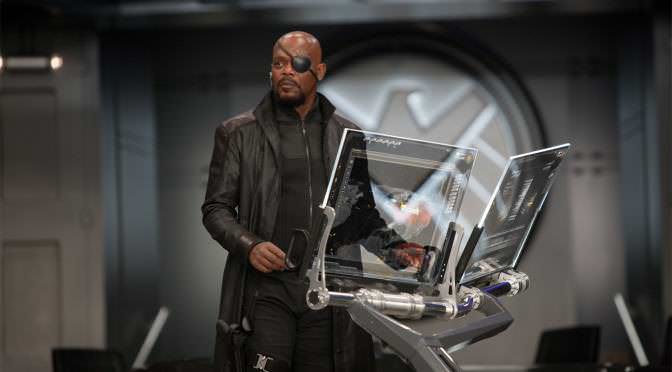
Scott: All in all, this is really a great film. It takes characters who sometimes previously only existed as sketches and makes them into living, breathing entitites, and weaves their stories of personal and professional growth into a story that is relevant-as-hell to the current geopolitical scene, AND has time for a whole bunch of chases, crashes, and superhuman fistfights. This is basically everything I want in a MCU film. I would not say the plot is complicated, so much as it is very involved, and it unfolds with a really consistent, engaging tone, and proves that Captain America’s optimism and dedication to doing what’s right is not an anachronism or a failing.
James: I’m a big fan of how the Russos combined a 1970s Robert Redford espionage thriller and a 2000s superhero blockbuster without sacrificing the core of either, but while sticking to a lot of practical effects: this is the first MCU movie to focus on straight-up fistfights that are more or less uncut with rockets or weapons. It uses medium shots and simple camera movements to keep the action from being jumbled, which is very classic camerawork, and while I’d be hard-pressed to say much about Henry Jackman’s score, I liked the Winter Soldier’s motif where the traditional instrumentation is disrupted and threatened by dissonance and electronic noises.
But more than any of that, CAPTAIN AMERICA: THE WINTER SOLDIER is a movie that refuses to compromise its morality. It takes a look at modern American warfare and flat-out calls it unacceptable.
Scott: I actually quite liked the score! It featured vintage, almost Bernard Hermann-esque violins with the 1940s fanfare of THE FIRST AVENGER.
James: Well, you’re the one with the music blog. (I did like the soft instrumentation at the beginning as Sam and Steve meet.)
Scott: It’s a movie that is ABOUT something - deflecting the fair criticism about the bulk of the MCU (and mainstream entertainment of all sorts) that it’s largely about powerful people smashing up similarly powerful people to maintain the status quo - and as we’ve pointed out, it takes a position about the nature of the beast that few conventional action films would, because it would be inconvenient to do so.
James: But in a way, this is the ultimate wish fulfillment movie: one good man basically brings down the entirety of the corrupt military industrial complex with little other than the power of being right (and suplexes)
Scott: I doubt this movie will inspire any great revolutions or reforms, but it’s got a soul worth thinking about, and puts it to good use.
James: This is like the anti-Tom Clancy.
And with that, our recap of CAPTAIN AMERICA: THE WINTER SOLDIER comes to a wrap! Join us later today as we wrap up FAST AND FURY-OUS with the final MCU movie leading up to AGE OF ULTRON, GUARDIANS OF THE GALAXY!
Scott: The movie that managed to make more money than any previous movie featuring a talking tree… in outer space.
