

[After the “noted” “success” of our LOST rewatch two years ago, James and Scott are back to prepare for the release of Avengers: Age of Ultron the only way they know how: by going through the entire Marvel Cinematic Universe, movie by movie. We are not very imaginative. Check in every week as we go into way too much detail about pop entertainment and frequently say people are wrong about things.]
James: What’s up, Scotty 2 Hotty?
Scott: Not much Road Dogg Jesse James
James: You will be pleased to know I actually watched the movie beforehand this time.
Scott: Colour me pleasantly surprised!
James: My week was busy, but not so busy I couldn’t make a little time for my favourite underrated sequel of the MCU. I speak, of course, of THOR: THE DARK WORLD, which a lot of comics people I know didn’t even see! And that seems INSANE to me, because this movie is a HOOT.
Scott: I think this might be the closest you and I come to butting heads during this rewatch, because while I enjoyed the film, and appreciated a lot of it more than the first time I saw it, but I still rank it beneath the other films of Phase 2, when IRON MAN and CAPTAIN AMERICA really hit it out of the park.
James: I think it’s maybe the weakest of Phase 2, if only because it doesn’t do a lot that the first one didn’t do; whereas IRON MAN 3 was this apotheosis of the character to date, and a milestone in his life, and where it and CAPTAIN AMERICA: THE WINTER SOLDIER were concerned with taking big philosophical questions for its titular characters, THOR: THE DARK WORLD is mostly about fine tuning the first THOR.
I think a lot of people who thought THOR was too disjointed should give THE DARK WORLD a shot, because right from the start, it incorporates its Asgardian and Misgardian halves a lot better. It also gives the non-Thor characters of the movie a lot more to do.
Scott: Yeah, it really takes the nuts and bolts of what worked about the first THOR movie - one of my faves from Phrase one - and works to hone in on them for the length of a movie. The plot is a fair bit more concise, although it lacked some of the twists that I loved about the first one, both in terms of supervillain action and the “fish-out-of-water” angle. That doesn’t mean it forgets to bring the funny, but as IRON MAN 2 proves, a good second outing usually doesn’t outdo the freshness of the first.
James: It’s REALLY hard to do, and next week we’ll talk about maybe the first example of the MCU doing that, but why don’t we get to the plot of THOR 2, which starts, not unlike THOR, with Odin narrating a tale of an old battle.
Scott: This time we’re going allll the way back to the Allfather’s Father, Thor’s grandpappy, Bor, who did battle with the Dark Elves at the dawn of time with their mysterious superweapon, the Aether, which is represented by a red fluid suspended in air, which is a pretty cool visual.
James: I actually thought that was the most Uwe Boll part of the movie! I don’t know why, but the weird sci-fi floating blood just did not do it for me.
Scott: Oddly enough, the Aether was something I bought into with no problem. The Dark Elves have this superweapon, although its nature isn’t really elaborated upon, and once they’re defeated, Bor buries it away… somewhere, and forgets it.
James: Now, what are your thoughts on how the movie sets up Malekith and his motivations? In THOR, the frost giants and the Destroyer being set up with a flashback didn’t mean too much, because they weren’t the real villains of the movie. But Malekith is, and a lot of people found his setup and portrayal by Chris Eccleston to be slightly lacking. I personally don’t mind a mostly functional villain representing nihilism and darkness when the focus on the movie is really crackling characters like Thor and Loki, who’s much more of an antihero here. My bigger problem with Malekith is that since he usually speaks in Dark Elvish, the movie gets that weird Lord of the Rings Syndrome feel to it where the fake language stuff almost seems like a bit of a put-on.
Scott: I mean, if nothing else it’s a dreadful waste of Christopher Eccleston, who was better-serviced in G.I. Joe: The Rise of Cobra than he is here. The main feature of the film is seeing Thor and Loki in action, and in a sense it doesn’t matter what they’re acting AGAINST, just that it seems like a big world/universe-threatening something-or-other… I don’t think it helps the movie to have flattened Malekith out that much, though.
James: I’m not a big fan of him in the comics - I love Jason Aaron’s run on Thor but I STILL need to catch up with half that Malekith storyline - so it felt pretty apropos here for me. It’s one way Thor suffers from having such an iconic enemy in his brother, who you it’s easy to overuse, and, like, Surtur at Ragnarok, which can’t exactly be in the second dang movie. He’s a lot like Superman that way: a couple of good villains and then the rest are kinda scrubs.
Scott: Of course, Malekith isn’t exactly an outlier for not being a totally 3-dimensional villain in the Marvel cinematic canon.
James: That’s one thing I pointed out to people who made that complaint! Hell, everybody’s favourite Marvel Movie, IRON MAN, has basically the most by-the-numbers villain around; it just capitalizes on Jeff Bridges’ natural charisma, whereas Eccleston’s more quiet intensity isn’t don’t a lot of favours by the heavy makeup and made-up foreign languages. Luckily, right after the relatively weak exposition with Malekith, THOR 2 jumps into one thing it knows how to do well: Anthony Hopkins and Tom Hiddleston chewing scenery at each other.
Scott: That’s the difference, I think. Bridges got to have fun, Sam Rockwell got to have fun, later we’ll see Lee Pace having some fun, but I can’t help but imagine Eccleston under there wondering why he bothered signing on for this.
James: To be fair, that’s basically Eccleston’s entire reputation as an actor, too.
Scott: Yeah, but he didn’t let it show when he was the Ninth Doctor.
James: We can… agree to disagree on that.
Scott: But yes, following up from MARVEL’S THE AVENGERS, Loki and Odin have some philosophical differences about Loki’s actions, and Odin’s tone here is nicely similar to his informing Thor that he was “NOT KING” back in the first one.
James: Odin screaming, “YOUR BIRTHRIGHT WAS TO DIE!” is pretty hardcore. One interesting thing THOR 2 does is recentre the Asgardian half around the family unit, especially with giving Frigga, played by THE THOMAS CROWN AFFAIR’s Rene Russo, more to do. It’s a movie about a nuclear family dealing with interpersonal issues as much as it is about stopping an elf from blowing up the universe with BLOODRAYNEFor instance, in this scene, the way Odin knows how he can hurt Loki is by denying him visits from his mother, the one member of the family he isn’t supremely pissed at, and whose connection he still values.
Scott: It was pointed out in our THOR rewatch that Loki and Frigga seem to share a much more genuine bond than Loki did with his adopted Father, and it’s great that this movie not only follows up on that, but largely hinges on it.
James: The entire second half of the movie is only even remotely feasible because it takes a couple of minutes in its first few scenes to lay some character groundwork.
Scott: Meanwhile, the nine realms are in upheaval: the destruction of the Bifrost in THOR (which seems to have been fixed by now) has caused chaos to erupt, and THOR and the Warriors Three Feat. Lady Sif are on the case, leading to some really charming mid-fight dialogue between Thor and Sif.
James: The movie seems to recognize that Sif and the Warriors Three didn’t get a lot to do in the first one, so it gives a bit more colour and motivation to them, from Sif’s charmingly flirtatious friendship with Thor to Hogun, who basically spends the entire movie being sent away “back home,” but at least gets his motivation explained.
Scott: Yeah, it was weird to write out one of the Warriors Three, but I guess things were getting crowded if they wanted to give a bit more to the others.
James: A nice little detail as Thor brings the battle to a close is that he gives the enemy a chance to surrender.
Scott: Couple of great zingers here: “I accept your surrender” to an obviously not surrendering rock giant, and “Perhaps next time we should start with the big one!” from Fandral.
James: The scene has a good sense of humour with acknowledging that none of this is a physical challenge for Thor. Thor’s challenge… is loneliness. As Sif points out, it doesn’t go unnoticed that Thor leaves the party early every night. He’s off with Heimdall, both learning about a mystical “convergence” that’s about to happen and certainly won’t be important later, and also to get updates on Jane Foster, as his busy responsibilities keep him from going back to Earth to see her.
Scott: Despite Frigga’s insistence that Thor should probably hook up with Sif considering she’s going to live a comparable amount of time to him, he yearns in his heart for that sweet Jane Foster.
James: I like Frigga’s gentle meddling almost as much as I like the idea that Thor has become closer friends with Heimdall, maybe the only other person in Asgard who understands putting your duty above all personal desires. Heimdall talks a lot about his duty, but there’s this great little detail later in the movie where he actually takes off his helmet and sits down at a pub table with Thor to talk things through.
Scott: Thor of course isn’t the only one having a hard time moving on. Ever since encountering the Asgardian bohunk, not even Chris O’Dowd can net a second look from Jane.
James: Ah, Chris O’Dowd, Nature’s Not Gonna Be The Boyfriend
Scott: Hey, he wound up with Kristen Wiig in Bridesmaids!
James: Too true! I just think of him as a charming loser, I guess. Jane’s out on a date with him until Kat Dennings’ Darcy shows up to be the movie’s best character.
Scott: Kat Dennings’ Darcy - the secret best part of the first THOR movie - collects Jane from her date when some science starts happening at an abandoned warehouse, where some random children are throwing random junk into a portal.
I love how we both referred to Darcy in essentially the same way (because it’s true.)
James: This movie plays it fucking MEAN withholding her saying “Meowmeow,” but it at least gives us her talking to Jane about “the lab-slash-your mom’s house” and having mastered driving in London while committing terrible, terrible traffic violations.
Basically, any scene Darcy’s in is Darcy’s to steal. Hell, she shows up in this movie with her OWN intern.
Scott: While still being an intern herself.
James: She takes Jane to the aforementioned warehouse, where a group of adorable multiracial urchins show them the portal, and Jane goes off to follow the readings on her machinery and ends up transported to a nether realm where the Aether is just chillin’.
Scott: Jane stumbles through a science hole and gets covered in the evil goo from GHOSTBUSTERS 2. This causes Heimdall to lose sight of her, which is basically all the motivation Thor needs to head to Earth to investigate
James: She reappears only to have Darcy follow the old chestnut of telling her she was gone for several hours and not just several minutes, one of the small perfunctory things the movie does in between amazing character interactions, like when Thor finally shows up and Jane slaps him. Thor calmly takes his punishment and sheepishly explains that he couldn’t visit because he was busy fighting in like seven simultaneous wars to bring peace to the universe, which she admits… is actually a pretty good excuse.
Scott: The reunion is pretty adorable, and Darcy realizing that it only wasn’t raining on her because of Jane is A+++
James: As is Darcy’s reunion with Thor, her previous taking villain, as she pokes his abs and comments that he’s still “all muscly,” and then the SINGLE GREATEST INTERACTION IN THE MOVIE:
Scott: “How’s space?” “Space is fine.” BIG THUMBS UP.
James: Darcy and Thor’s weird “you’re banging my best friend and I guess you’re okay” friendship is adorable. I will say: it’s hard to do the “disaffected, quippy sidekick isn’t impressed by otherworldly stuff” character well - hell, it’s hard to do disaffected quippiness well, as Dennings’ day job shows - but both THOR movies consistently hit the nail right on the head with Darcy.
Scott: Yeah, Darcy is such a joy because it could have been really tacked-on humour, but it feels pretty natural when she interacts with Thor, possibly because she first met him as a weird shirtless guy she had to tazer.
James: Thor clearly sees her as an equal because of that! He treats her with more respect than he treats Tony Stark.
Scott: And considering how Tony was written in MARVEL’S THE AVENGERS I don’t blame him!
Here we get a glimpse of the whateverness that the Aether has done to Jane, as the police attempt to arrest her for trespassing, and she explodes (non-lethally) at them.
James: Thor isn’t a dummy, no matter what his brother says to their father, and he immediately takes Jane back to Asgard for help, and the movie, about half an hour or less in, basically fixes the entire slightly disconnected feeling of parts of THOR.
Scott: At the expense of some of the joy. Jane in Asgard is not nearly as much fun as Thor in Midgard. To be fair, she’s undergoing a pretty serious medical crisis.
James: I do like the precociousness she brings to it, though, as she teases Thor about how “you told your dad about me?” and is a bit of an adorable know-it-all when being treated by the Asgardian healers, when she looks over to Thor and basically tells him that yes, she was right about knowing what this weird magic machine is. It’s much “smaller” humour than Thor throwing mugs, shouting in a booming voice and being tazed, but I do see the throughline in the fish-out-of-water story. To me, the movie just smartly knows that it can’t do the ENTIRE thing over again. Like I said at the beginning, it’s pretty good at not repeating itself while fine tuning the things it does repeat.
Scott: I still would have liked a bit more. Asgard is this wonderful, ageless, impressive place, and while I wouldn’t expect Jane to commit as many faux pas as Thor did in New Mexico, it feels like a missed opportunity for a tour and some bonding, but the extent is mainly some exposition about the Convergence that is a bit more functional and dry than the similar talk about Yggdrasil and the Nine Realms in the first film.
James: I think it would have been harder for the movie to sustain a Jane-in-Asgard story, if only because with Thor in New Mexico, we’re familiar with the world, so Thor breaking our established social norms has the bite of transgression to it. With Asgard though, we don’t really know too much, and I can see an expanded bit with Jane there being just people talking exposition about Asgard and Jane being a Ricky Gervais character. We get the beats I think we need - Jane and Odin, Jane and Frigga, a hint of Jane and Sif, and Jane science bickering with the healers - but there’s definitely no spare meat on the bone, I’ll agree.
Scott: Earlier in the film we were treated to some truly impressive scenery shots of Asgard that manage to outdo what we saw in the first THOR, but I feel like this movie could have taken five minutes for a bit of a closer look so that Jane, and the viewer, could soak it in. I guess I really just wanted Thor to sing “A Whole New World,” y’know?
James: And I thought the CGI shots of Asgard were basically no more impressive than the first movie’s, so I consciously thought, “Oh good, they’re not hovering on this any longer than they have to.” I guess I just figure I got enough of this in the 16 or so hours of Peter Jackson Tolkien movies I’ve seen, ha!
Scott: So, Malekith and his army have been awakened by the Convergence and the sense the Aether in Asgard, so his big plan is to turn his friend Algrim into The Accursed, get him locked up in Asgardian jail so he can cause a riot that ties up the Asgardian army, and then attack with giant ships. It… works, actually. Aside from not actually getting the Aether.
James: There are some nice details, like how the Accursed transformation process is never explained, but just shown a couple of times here and at the beginning scene, or how the Accursed sees Loki in a cell and that becomes important later. I’m also a fan of Frigga’s visit to Loki, where he acts like a petulant child and Rene Russo gives him this amazingly patient concerned mom face.
Scott: Rene Russo manages to carry a lot of weight for her part in this film.
James: It manages to be economical like the first movie while also still expanding a bit, like Frigga’s relationship with Loki and Odin, or seeing Volstagg surrounded by his children at the earlier celebration while Fandral relaxes with some honies.
Scott: We also get to see Heimdall KNIFE AN ELF SHIP TO DEATH so that’s cool.
James: Heimdall straight up stabbing a spaceship is the most metal thing in the movie. I’m also tickled that, much as in the first movie, Asgard remains surprisingly easy to break into. That said, while Heimdall can’t “see” Malekith’s magic spaceships with his magic vision, he can at least tell when one’s there.
Scott: But the Dark Elf forces are a bit too much for the Asgardians - Frigga fends off Malekith herself to allow Jane to give them the slip, but at the cost of her own life. Malekith also destroys Odin’s throne just to be a dick.
James: The scene with Frigga and Malekith is interesting, because it’s half motivating tragedy for the men but also half actually interesting character work for Frigga. It also makes me laugh that her big magic trick was hiding Jane behind a pillar, where Malekith would never think to look. Like, it’s dopey, but it also mostly works for me because the Thor movies are inherently such a heightened melodrama, even in a world as already melodramatic as the MCU. It’s just the right kind of silly.
Scott: Frigga also gets a really nice funeral scene, which helps seal the deal for the viewer on her death being a moment of significance, which it has to feel like for the next act to work.
James: Whereas we disagreed about the establishing shots of Asgard in the movie so far, I think we’re in agreement about this scene; it’s powerful and it’s really visually stunning. It is, visually, one of the most beautiful bits of the entire MCU, I think.
Scott: Totally. It’s full of little touches that feel like this is a living culture and not just distant gods that live static in sagas. And it kills Loki that he can’t be there.
: And it gives us the push to the second half of the movie by altering the emotional states of the characters: Loki is heartbroken and has a tantrum like a child, Odin gets dangerous and belligerent, not unlike Thor in the first movie, and Thor is sad but also clear-headed enough to know what he needs to do. It’s an interesting reversal of the first movie, where Thor was the one being chided about not thinking his way through problems, and Odin was the one with a plan. Odin is content to wait for Malekith to come back and basically throw lives at the problem, not unlike Malekith’s destruction of his own people in the opening flashback, while Thor realizes that if he’s going to save his home, he’s going to have to commit treason.
Scott: It actually is pretty great that the entire second half of this movie demonstrates the character change Thor went through in movie 1, instead of just resetting him to the headstrong adventurer. While still settling on a plan that ultimately requires him to drop Mewmew on somebody.
James: It’s really interesting, because it presents a different emotional challenge for Thor; the first movie was about him not rushing into catastrophe, while this movie is about the broken trust between him and his brother. Thor’s journey here is to not only figure out how to save the universe, but how to reconcile what he knows about Loki with what he wants to be true.
Thor, in the scene I mentioned earlier where he and Heimdall talk as friends and equals, negotiates a compromise: Heimdall is honour-bound to report Thor’s well-meaning treason, but he’s wiling to give it enough time to work. Meanwhile, Thor recruits the Warriors Four and, much to their consternation, his brother. Of course, Thor’s not a complete dummy, and he acknowledges in their clandestine fireside chat that of course he knows that Loki will try to betray him, but he’s pragmatic enough to know that he needs Loki to save both the world and Jane, who’s being killed from the inside out by the Aether. And as always, he’s optimistic about his brother just enough to give this a shot.
Scott: This whole stretch is the high point of the film: not only is it a pretty neat plan in its set-up and execution (the MCU heroes so rarely get to indulge in capers like this!) but it’s also loaded with great moments for Thor, Loki and the Warriors.
James: Each of them, who have already gotten at least one good moment in the movie already, get a send-off. It’s just a little bit EXTRA from what the first THOR does, even if it’s not as novel as the first movie overall. They each basically peel off to hold off Odin’s guards long enough for Thor, Loki and Jane to steal one of Malekith’s crashed ships left behind, and bicker nonstop in one of the more adorable and purposeful sequences in the movie.
Scott: “Press the buttons gently.” “[While bashing everything] I am pressing gently!”
James: Thor pressing buttons is AMAZING.
Loki’s been brought in because, as established in the first movie, only he knows all the secret ways in and out of Asgard, and instead of helping Jotuns sneak in here, he’s helping Thor and Jane get out, all for the promise of getting to revenge murder Malekith.
Scott: Loki: “I’m clearly the better pilot.” Thor: “Which of us can actually fly?”
James: It comes off as really realistic family bickering, and a few moments earlier, Loki even casts an illusion that makes him look like Captain America, just so he can tease his brother.
Scott: And it is AMAZING.
James: However, once they actually get out of Asgard via a really cool tunnel where they appear to generate world-traveling rainbow magic by scraping up against multicoloured crystals on the walls, things get real, as Thor and Loki drop the jokes and start really letting each other have it over their frustrations.
Scott: This is what happens when people stop being polite and start being real. This is The Dark World.
James: <slow clap>
Scott: So the plan is to let Malekith drink all the Ocean Spray out of Jane, and then smash him/it/something with a hammer. But those pesky brotherly tensions get in the way pretty much immediately and things go BAD. Like, “Stab Thor and cut off his hand bad.” Psych! That was all part of the plan!
James: The turning point that hints at this kind of thing, I think, is when, in the middle of their fighting, Thor and Loki agree that Frigga, while she wouldn’t want them to be fighting over her memory, wouldn’t exactly be surprised, either. James: It’s a nice little subtle scene that sets up the hilarious melodrama of HANDS BEING CUT OFF and BETRAYAL and EXPLOSIONS.
Scott: Loki had to seem to betray Thor so that Malekith would take the bait, much to Tumblr’s relief that Loki is totally not all that bad, you guys. Sadly, the whole thing goes sideways anyway, when the Accursed/Kurse/Mr. Eko gives Thor a pretty significant beatdown, and Loki sacrifices himself to save him.
James: The thing is played pretty seriously for something that you almost have to know is a fake-out, partially because it happened 2/3 of the way through a movie and also to an extremely popular character, but still, it’s played nicely in the moment. Afterward, Jane and Thor are wandering the desolate plains of Svartalheim (Malekith’s realm, where they lured him to), when Jane gets a phone call from Earth, namely from Chris O’Dowd, who’s still into her despite her literally leaving in the middle of their date and then never talking to him again. This signals to Jane and Thor that the Convergence - the big alignment of all the realms where the walls barriers between them are weak, and what allowed Jane to find the Aether in the first place - is upon them. It provides both the motivating timeline for the rest of the movie by giving Malekith’s plan a deadline, as well as giving Thor and Jane a way back home to Earth when they discover the portal they were on the other side of in London earlier. Jane picks up the keys that Darcy’s intern threw into the portal earlier and Thor asks why there are so many Earth shoes sitting around this weird elf cave.
Scott: That whole sequence of events is just delightful. I do love the tone of this movie. Meanwhile on Earth, Darcy and Ian the Intern’s Intern collect Erik Selvig from psychiatric lockup because he has gone, to quote Darcy, “Bananaballs.”
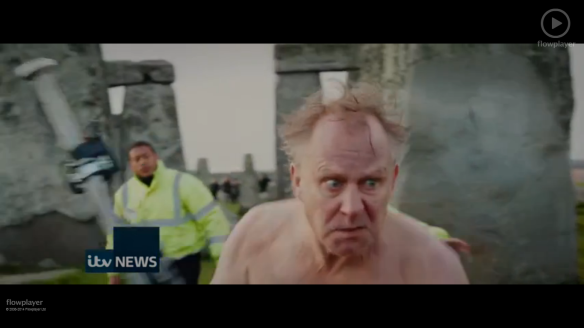
James: To put it lightly. After having a god in his brain (which he doesn’t recommend), he’s become unhinged, harassing tourists at Stonehenge and getting institutionalized, though when he realizes all his ramblings of the Convergence were right, he basically tosses away all his medications because hey, he was right.
Scott: Also delightful: Thor asking “So, who’s Richard?” (“Really?”) and then hanging Mewmew up on a coatrack.
James: Thor hanging Mewmew on a coathook is my literal favourite part of the movie, and it’s the one image/gif to show someone to explain why the Thor movies are so much fun.
Scott: Also, apparently that is one worthy-ass coathook.
James: I actually like how it reinforces the idea that Mewmew doesn’t actually weigh that much, it’s just impossible to lift if you’re not worthy. So it doesn’t break the coathook because it’s not exerting much actual pressure on it, though only Thor would have been able to move it again.
Scott: Also, someone I follow on Tumblr reposted this today as a weird coincidence.
James: I’m also a big fan of Thor and his friend Eric’s reunion, as Selvig awkwardly asks if Thor’s brother is coming and REALLY misreads the situation when he finds out that Loki is dead. (“Dead.”)
As soon as the crew gets back together on Earth, the movie REALLY steps into high gear.
Scott: They realize that monuments like Stonehenge were signposts pointing towards the focal point of the Convergence, at Greenwich, where Malekith is landing his spacecraft to go zap the nine realms with Aether when the portals between them are open.
James: It’s a FANTASTIC little detail that goes by in about two seconds that the long-standing mystery of how monuments like Stonehenge were built despite a seeming lack of technology available at the time is basically solved, in the MCU, by saying, “nine magic realms aligned and gravity got weird for a little while.” That’s fuckin’ BRILLIANT. It goes by in literally two seconds!
Scott: The portals, and the anti-gravity shenanigans play nicely into the climactic battle, offering some pretty interesting action surrounding a pretty huge brawl between Thor and Malekith. Which is choreographed around a runner about Thor having incredibly bad luck near-missing Mewmew as it zips about.
James: There are two things I love about the final battle scene:
First, it’s easily the most visually impressive out of all the MCU action climaxes, even surpassing IRON MAN 3, as the portals you mentioned provide an interesting visual spectacle as well as a puzzle for the good guys to solve, since the whole thing is disorienting and, like you said, keeps Mewmew whirling around in the air and never reaching Thor. It feels like a really SMART action scene, which is interesting coming from a dedicated TV director, Alan Taylor, who’s worked on really smart shows with interesting visuals (Sopranos, Mad Men, Game of Thrones… basically, almost every premium cable show people remember fondly) but rarely if ever worked in something of this oeuvre.
Second, I love that the science team - Jane, Darcy, Darcy’s intern Ian and Selvig - are active participants. They not only figure out how to defeat Malekith and set up all the weird high tech lawn darts, but they actually use their tech to manipulate the gravity and portals to affect the fight and help Thor. Thor is basically there to persevere through a hellish beating and do the physical work they can’t, but it’s actually the humans who defeat Malekith. It’s all really something special.
Also, Darcy FINALLY yells, “Mewmew!”
Scott: We even got an Ice Monster from Jotunheim courtesy of one of the portals!
[It effectively ties together the Earthbound science stuff and the Asgardian space stuff, finding the ideal balance between the two idioms that the THOR movies make a great deal about blending.
James: It fulfills Thor’s fireside explanation to Jane in THOR that where he comes from, magic and science are the same thing. And it also solves a problem endemic to a lot of action movies, especially superhero movies, where the non-hero characters, usually the women, basically operate on the sidelines. Both it and IRON MAN 3 are better about giving what other movies would call “love interests” actual narrative heft
Scott: I was going to note the odd similarity between Jane’s plot here and Pepper’s plot in IM3, where they have a badguy thing inside them that needs to be removed, but in Pepper’s case it takes place at the end of the movie, and for Jane it’s the middle. Similar approaches to solving the same problem of incorporating the non-action love interest character, but the similarities are really just superficial.
James: Pepper gets her empowerment by basically being elevated to Tony’s level of power, while THOR: THE DARK WORLD celebrates Jane’s known talents. It’s really cool. Basically, Thor and Science Team use the science lawn darts to basically transport parts of Malekith through different portals to different worlds, before dropping his own giant spaceship on him. It’s a fun, elegant way to both get rid of the villain and to limit the damage to London, where the scene takes place.
Scott: And Jane even throws herself on top of a downed Thor when she can’t move him out from beneath the falling ship, just in case it doesn’t get zapped away!
James: I was actually really impressed with how the movie used the portals to keep Thor and Malekith from crashing into buildings or people in populated areas. It’s a cool way to get around the AVENGERS/MAN OF STEEL problem.
Scott: Once Malekith is disposed of, Thor returns to Asgard to resume bringing peace to the realms, while the science team shares a somewhat sombre breakfast, unsure when they’re going to see The Odinson again. As it turns out, thanks to the Convergence, Thor’s victory was broadcast to all nine realms, and peace reigns throughout the universe, so that’s pretty cool!
James: Of course, then there’s the reveal, hinted at in an earlier scene when a “guard” surrounded by green energy wisps looked around Svartalheim and reported on Loki’s body to Odin, that Odin isn’t Odin… it’s Loki, who’s done as Thor knew he would but wanted to believe he wouldn’t, and betrayed everyone again.
Scott: I do love how Loki’s entire participation in Thor’s plan for good was just the long con to get himself into power.
James: It’s a really interesting scene, because it begs the question of how much of “Odin’s” compliments to Thor are legitimate, and how much is Loki saying what he knew Thor would want to hear. It’s a surprisingly complex scene when I think about it, because it’s clearly Loki’s plan to butter up Thor to the point where he’ll refuse the crown, but at the same time he’s actually acknowledging Thor’s excellent plan and execution of it. The subtext is fascinating: a brother pretends to be a dad to give the other brother the approval that neither of them ever got from their real father. And, of course, as you said, it’s another example of a preposterously smart Loki long con.
Scott: Such is the genius of a character like Loki, where there’s an element of genuineness to his silver tongue.
James: And with that, the movie ends, complete with a mid-credits scene with the Collector (to be seen in GUARDIANS OF THE GALAXY) where the magic items in the MCU are revealed to be Infinity Gems, and a post-credits scene where Thor and Jane make out while a frost giant troll puppy frolics in the warehouse.
[2015-04-10, 12:36:17 AM] Scott: We had already seen Thanos so we knew the Infinity Gems were coming, but it was a nice reveal that we’ve officially already seen two of them.
Scott: Because after all, they don’t exactly look like gems.
James: It’s some cool long-term table-setting for Phase 4.
Final thoughts?
Scott: While I’m not quite as wild about it as you are, it’s a movie where I liked everything about it. It managed to bring back a ton of the best features of THOR and present them in a fresh way, from the Science team, to the Warriors, and most importantly Loki and the Asgardian royal family, and had several stretches that made it feel truly unique, particularly the stuff from Loki’s release onward.
James: Yeah, I think the final act of the movie is one of the best single acts in all of the MCU to date.
Scott: The bad guy is pretty rote, but we’ve noted that is actually a trend in the MCU, and I think it’s only the existence of Loki that makes Malekith that much less interesting. The heart of the movie is in the extra elements: The Thor-Loki relationship in particular. I don’t think the overall moviegoing experience is as great as the movies before and after it, but there’s no reason people should dismiss this one.
James: For me, I never quite understand why more people don’t like it; it’s often brought up as one of the worst movies in the MCU, along with the first THOR. Which is crazy to me! It basically reads like Joe Quesada and Kevin Feige heard people’s complaints about the first one and decided to respond to them all, one by one.
Here’s the thing: I think if you put it in Phase 1, it’s easily one of the best ones there. But because the first one had this weirdly bad rap, and it came before WINTER SOLDIER, DARK WORLD gets this weirdly inflated bad rap. It’s got a lot of the whimsy and fun that people SAY they like about IRON MAN, and that people definitely like about GUARDIANS, and none of the weird sexism or homophobia that those movies sometimes flirt with. It has a RIDICULOUSLY charming cast, pays attention to continuity and has, along with THOR, the single best sight gags and physical comedy in all of the MCU. I just don’t get it! For me, it’s uniqueness more than makes up for the slightly rote elements that all of the MCU sometimes falls prey to.
Scott: It’s so strange to think of these movies as maligned, since most would agree Loki is one of the best features of the MCU, and this movie manages to get him back to being a lovable schemer instead of a genocidal psycho.
James: It, like IRON MAN 3, does a lot of necessary rehab work after MARVEL’S THE AVENGERS, something that will be continued next week as we discuss CAPTAIN AMERICA: THE WINTER SOLDIER.
Scott: The first post-AVENGERS movie to win broad, unqualified acclaim!
