

[After the “noted” “success” of our LOST rewatch two years ago, James and Scott are back to prepare for the release of Avengers: Age of Ultron the only way they know how: by going through the entire Marvel Cinematic Universe, movie by movie. We are not very imaginative. Check in every week as we go into way too much detail about pop entertainment and frequently say people are wrong about things.]
Scott: Welcome back readers to our always-insightful and totally important Marvel Cinematic Universe Rewatch! Last week we covered THOR, possibly my favourite outing in the first spate of films, and this week we’re looking at CAPTAIN AMERICA: THE FIRST AVENGERs movie to have a subtitle.
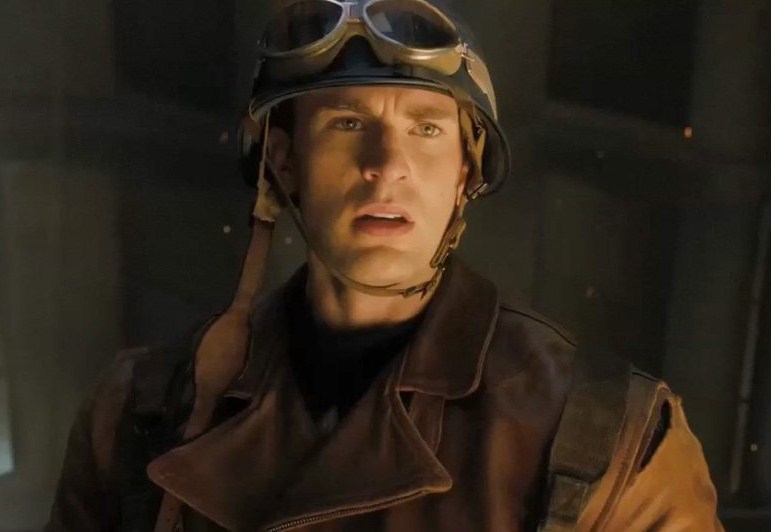
James: And where THOR is your favourite movie, CAPTAIN AMERICA is probably my favourite one. I was skeptical about it when it was coming out, not for reasons of cast or direction, but just because Cap is a hard character to really nail; he’s completely genuine, but in a way that I think a lot of people are uncomfortable with in comics and action movies. Steve Rogers, in my mind, doesn’t really quip, and he’s certainly not sarcastic, but the dry sense of humour in the first four Marvel movies was what defined them, and I wasn’t sure how well they’d make the transition to a different tone. It turns out: REALLY DANG WELL. In a lot of ways, this is the movie that made me believe in the idea of the MCU.
Scott: Yeah! I mean, as with going into THOR, I didn’t really have a fixed idea of what kind of character “Captain America” was. I know exactly who Spider-Man is, and to a degree I know Iron Man and the X-Men, but I saw Cap as sort of a stern but even-keeled military type, the guy whose entire persona is defined by leading the Avengers and rhapsodizing about baseball and apple pie. He seemed to be a character who belonged in comics more than the others: as that icon who couldn’t really walk and talk in three dimensions like the others. Pretty wrong.
There was also the added tension - and I don’t know if you had this too - of being Canadian and cheering for a character who wears the American flag. Like, we watch tons of movies where the characters are American law enforcement types, but they don’t always have the potential for rah-rah jingoism that Cap seems to have. And that’s even addressed within the movie, but the movie is far from being built around it. I felt like even though Cap is portrayed as a universal symbol in the comics, he never really resonated for me partly because of that.
James: There’s definitely often an element of emphasis on the America part of his name. There was also the idea that Chris Evans had been in a Marvel Comics movie before - two in fact - and the underwhelming nature of those Fantastic Four movies had a lot of people doubting about whether he could make a good Cap. Which is funny, because now I can’t imagine anyone else being him.
Scott: Chris Evans, to me - I swear, right up until the moment he comes out of that metal cocoon - was the love interest in Not Another Teen Movie. He had this goofy charm that I couldn’t reconcile with Steve Rogers. And now I’m just like “Oh, yeah, that’s Cap.”
James: I think, in a lot of ways, Captain America is a lot like Superman; his earnestness is hard to portray well, and a lot of people think it’s inherently boring. It’s the reason why the antihero - an idea I wish would just go away - is so compelling to many; it’s the idea that it’s a good guy who’s not that “good,” so they’re more interesting.
Scott: Yeah. He doesn’t seem to jive with the way we like to think about heroes in this day and age. And I think for a lot of those reasons, I waited forever to actually see this movie. I saw it like two years ago, well after the first Avengers movie!
James: But because of that, I think when the earnestness is portrayed well, as it is in this movie, it means even more and lands even better. Last week, with THOR, we talked about how Chris Hemsworth gave the character a genuine bonhomie that made him able to be rooted for when he wasn’t that nice. With Evans as Steve Rogers, that goodness is never in question, and is never cloying, either.
Scott: Exactly. Instead of being hokey, it wins you over. And quick. The entire film is also steeped in an aesthetic that makes Evans’ portrayal feel very at-home.
James: And with that, should we actually start with the plot?
Scott: Yes! It begins with the Titanic moment of discovering… something in the Arctic. Just to set things up, orienting us in time, an arctic expedition uncovers a huge World War II era plane, where we see a glimpse of a familiar red, white and blue shield. And for the backstory on that, we briefly* flash back to 1942! (*for the span of the entire film.)
James: It’s funny, the opening scene isn’t that long at all, but I find it still lasts too long. Do we really need the explanation that all the snow and wind in the arctic makes it hard to find things? Luckily, it’s not really that long, and we cut to the German forces, led by Johann Schmidt, the leader of Hydra, busting down a Scandinavian church’s doors.
Scott: Part of the secret charm of this movie is that this is where the threads of the Avengers start to come together, and it feels right that it comes at this point in the MCU’s existence. Later we’ll learn about Howard Stark and the proto-SHIELD, but this first scene ties Captain America’s movie explicitly to THOR, which would be the trickiest to tie it to. Schmidt’s philosophy is tied to the explicit interest the Nazis had in Norse mythology, as well as the revelation in THOR that the Asgardians were scientifically-advanced/magic-ish Gods from beyond the stars.
James: There’s a bit of talk in the scene about how the things Schmidt is looking for are just “superstition,” but, well, then there’s a blue glowing cube hidden inside a carving of Yggdrasil that you access by poking a giant serpent’s eye, and well, I think we all know that magic is real here.
Scott: This was a great way to start the movie - or would be if it had started the movie - because it establishes the pulpy, almost over-the-top stakes of the movie right away, with Hugo Weaving’s sneering still-human-in-appearance bad guy looking for a magic sci-fi cube in a church in WWII-era Norway. Maybe it was just my imagination, but I think I saw a mask-like seam at the back of Weaving’s face.
James: It sets up a good foil for Steve, by setting up a villain who’s all about magic and being a god. As we’ll see in the next scene, Steve is anything but grandiose.
Scott: Fun fact: I was Puny Steve Rogers’ body double! Don’t look that up though, I was uncredited. And unpaid. And unaware at the time why I was being filmed.
James: You thought it was an innocent pornography job!
Scott: Look, sometimes you get filmed by strangers and you just proceed on the assumption it’s for an skinny guy fetish site.
James: We meet Steve as he’s waiting in a recruitment office, and, in a great visual gag, he’s hiding his comically small frame behind a large newspaper, whereas the big galoot next to him is just holding a little one.
Scott: “Kinda makes you think twice about enlisting, huh?” “Nope.” There’s Steve.
James: The first third of this movie is all about showcasing Steve as this incredibly genuine guy who just wants to do the right thing. The recruitment officer looks at the laundry list of Steve’s physical ailments and denies him on the spot. And since the body double being used is so INCREDIBLY tiny and skinny, well, it’s not hard to understand why. The army feels like they’re doing Steve a favour, though he sees it as anything but. Not long after, he tries to console himself by going to the movies, which ends up in him trying to enforce common etiquette and ending up getting beaten mercilessly by a bully in the back alley.
Scott: The effects used are a little odd at first when he’s standing there shirtless at the recruitment office - he looks like a lollipop - but you get used to it and soon you forget you’re looking at an effect. The way it’s written, it’s like Rogers is unaware he doesn’t look like Captain America yet. As he says later, he does not like bullies. And if “not liking bullies” were his only distinguishing trait, the movie might overrun with earnestness, but we get some really great bro-time with Steve’s old pal James Buchanan “Barnesy” Barnes.
James: There’s also the first of two scenes where comics’ favourite shield-wielder uses a different object as a shield (this time, a garbage can), which is just so straight-faced I love it.
The Steve/Bucky relationship is a really good part of the movie; Buck is clearly one of the few people Steve feels comfortable being around, because his friend only ever sees him as Just Another Dude, and because of that, it’s where Steve feels free to crack jokes and tease people. It’s something he doesn’t do with ANYONE else in the movie, which is a nice touch.
Scott: I loved the aging-up of Bucky. I don’t think giving Cap a teenage sidekick would quite resonate the way this was, having Bucky as his friend from the neighbourhood who embodies everything Steve wants to be. Bucky notes with the incredulity of a born-and-bred Brooklynite “You told them you were from New Jersey???”
James: That’s a nice detail, because it’s where we learn that this isn’t the first time Steve has tried to enlist; he’s been turned down a lot, but he keeps going back. The aging up of Bucky was something that was controversial at first, but which I think was entirely necessary. Beside giving Steve a true confidant, the Child Sidekick trope was a product of the Golden Age of Comics, where every hero had a kid standing next to them being perky and naive enough to need to be corrected. That plays completely different in the year 2014 when we already KNOW Bucky is going to die (“die”), and where we’re just not comfortable with the idea of child soldiers. Especially in a movie that’s more action movie than superhero movie, where a child sidekick would be even more out of place. It gives a good way to have Steve go around his pre-enlistment plot without talking to himself or needing a narrator. It’s just an all-around good choice.
Scott: Plus, if Bucky was a kid we wouldn’t get him and Steve going on a terrible double date where Steve is more interested in moping about his latest 4F!
James: Exactly! This movie has a lot of fun with showing how entirely uninterested in girls Steve is, and how underwhelmed they are by this dork who just wants to join the army and isn’t really interested in seeing Howard Stark’s failed flying car.
Scott: Also at the World’s Fair: The Synthetic Man, a nice shoutout to the original Carl Burgos Human Torch! Steve finds a recruitment office so he lets his pal ditch him so he can see if THIS is his lucky go, and wouldn’t you know it, there’s WISE OLD STANLEY TUCCI who sees something in this young man.
James: Fun fact: every single scene Stanley Tucci is in in this movie, my notes start off with, “THE TOOCH ___ POINT OH”
Scott: I have come to love Stanley Tucci because he’s becoming one of those guys who never turns down a role and yet never phones it in.
James: He’s an extremely underrated part of this movie as Dr. Erskine, the German expat scientist who wants to make sure he doesn’t create a(nother) monster. There’s a beleaguered kindness to him, a guy who wasn’t ground down by the Nazis, or by Hydra, or by trying to be an idealist in a very justifiably pragmatic army. He knows this isn’t Steve’s first attempt at applying, and very pointedly asks him if he wants to go kill Nazis. Cue the first part of the movie that makes me weepy: where Steve says bluntly that he doesn’t want to kill anyone; he just hates bullies, no matter where they are. That is literally the moment where I knew this movie was going to succeed.
Scott: It’s important that Steve isn’t an Inglourious Basterd. I like that movie, but this can’t be that.
James: We’ll get to it later, and it’s been written about elsewhere, but a key part of Captain America for me is that he doesn’t hold a weapon. He holds a shield, with all the protective connotations that has. Steve isn’t a pacifist by any meaning of the word, but first and foremost, he wants to protect people. This is the scene where that starts gelling, where we get the idea of a soldier who doesn’t particularly want to be a soldier; it’s just the necessary venue for him to serve.
Scott: After a scene of Schmidt plotting with his chief scientist Dr. Arnim Zola, we are treated to a pretty nifty boot camp montage emphasizing the ways Steve falls short physically, but stands out in character.
James: The Schmidt/Zola scene is most notable for having a fun glimpse of Zola through a magnifying glass that distorts his head to giant proportions, a fun wink to the form he’s best known as in comics: a distorted face viewed magnified through a screen.
The boot camp sequence is delightful, and it continues something from Steve’s first conversation with Erskine: the idea that soldiers aren’t necessarily something to ASPIRE to be, which is a pretty revolutionary idea for an American superhero movie about maybe the most famous fictional soldier ever. It’s something we see throughout the movie, but is exemplified here by the boorish recruit who catcalls Agent Peggy Carter; soldiers in CAPTAIN AMERICA, unless they’re Cap’s hand-picked friends, are often uncouth, boorish and not particularly admirable. Even Tommy Lee Jones’ character of the General is a grumpy ass who is routinely shown to be on the wrong side of judgment, particularly where the hero of the movie is concerned. The crummy recruit gets punched out by Peggy, the General is shown up by Dr. Erskine, and Steve shows his mental and moral fortitude by first thinking his way through a challenge (retrieve a flag from a flagpole, which nobody can climb but Steve just unhitches from its base and lets fall to the ground), and then by jumping on a grenade thrown by the General, trying to prove a point about “real” soldiers, when everybody else jumps away in a panic.
It’s actually funny how fixated the General is on Steve being “skinny,” considering the whole idea of the Super Soldier program is that the serum negates any need for a strong and strapping recruit. Like, if the smartest, bravest dude is the skinny dork, well, guess what, the part you don’t like is the part that you know is fixable.
Scott: I 100% love Erskine’s scene with Rogers explaining the nature of the super-soldier serum: “A man who has known strength his whole life loses respect for it.” It’s very important to this movie that the super-soldier serum enhances Steve’s outside to match his exceptional inside, that he’s not just a steroid freak. I don’t know if the Red Skull’s part in the backstory as Erskine’s original subject was a Kirby original, or came later, or was for this movie, but I quite enjoyed the way they were tied together in that regard.
James: It also matches the structure of the movie, where Steve and Schmidt get scenes back-to-back to highlight their differences.
Scott: Therer’s a thread running through every single one of these movies, from IRON MAN to INCREDIBLE HULK to THOR: There is a secret weapon, and isn’t it great that the exact right person is using it? All the Marvel movies are fairly uncomplicated in their morality, but this one moreso than the others. You don’t get much more black and white than a renegade Nazi with a red skull for a face.
James: Who constantly talks about how he walks in the footsteps of gods. Up against a man who is explicitly asked by his mentor, Stanley Tucci (isn’t he that to ALL of us?), to not be a good soldier (something portrayed as being dangerous), but a good man. It’s simple, and it works because Tucci and Evans are so pitch perfect in their roles.
Scott: One of my favourite lines: “Many forget that the first country the Nazis invaded was their own.”
James: A lot of war movies equate Germans with Nazis, which this movie studiously avoids. I mean, part of that, like the careful avoidance of any swastikas, is just probably Disney being smart about making sure they could release the movie in Germany. But a nice side effect of it is that it produces a movie that is deeply kind and humanist.
Scott: The movie straddles that line oddly effectively, re: swastikas. It quickly establishes Hydra’s relationship to Adolf, but just as quickly pulls it back into being its own thing, inhabiting a niche in this fictional history where there does feel like room for a magic/science paramilitary cult to crop up.
James: We move on to Steve and Peggy being driven to the test building, which full of adorable things like Steve pointing out all the places he’s been beaten up, and where he tries to flirt with Peggy using traditional masculinity (“What’s a dame like you…”) and immediately backs up into just trying to be decent. He really doesn’t know how to talk to women.
Scott: This scene is just so perfectly sweet, the whole dancing subtext that runs through the rest of the movie, what with “waiting for the right partner” and all. Suh kewt.
James: The scene that launched a thousand ‘ships.
Then we continue to the actual scene where Steve gets his super soldier serum, which is super duper unnerving.
Scott: I love the full-on retro science with syringes and vita-rays and knobs and dials and that weird metal coccoon. And a shady-looking guy from the state department with the improbably name of Fred Clemson.
James: Yeah, the retro-industrial mad science with giant metal syringes and green lacquered metal gives it a very different feel to what I think we’re used to in movies, or even in MCU movies so far; it’s imposing, where the high tech in other MCU movies was austere, modern and sanitized. This scene features Steve screaming so much at the pain that they almost shut down the procedure until he begs them not to.
Scott: The whole process is just a weird enough melange of processes and of course that horrific screaming that really sells the completeness of this transformation. I also love the cloak-and-dagger stuff, the little old lady with the code words and the secret bookshelf. It’s fun and charming and like Steve Rogers’ attitude it would be an ill fit in a different movie.
James: Of course, it can’t stay charming forever, because THINGS need to happen! Fred Clemson turns out to be a double agent, and after Steve emerges from the vita-ray chamber and is ogled by a barely-able-to-keep-herself-from-petting-his-abs Peggy, an explosion is triggered, Erskine is murdered and Steve has his first adventure, a chase through Brooklyn to the docks.
Scott: Hey, Peggy is able to keep from ogling him long enough to make at least one killshot on a Hydra saboteur, Clemson’s getaway driver! But the resulting race between Clemson (in a stolen cab) and Rogers (barefoot through the streets of Brooklyn) is the movie’s first way of signifying the physical prowess of the hero, and it’s pretty darn epic.
James: It’s a nice touch that Peggy is pissed at Steve for pulling her out of the way of the getaway car (and keeping her from making another shot), and that Steve apologizes for it sheepishly.
Scott: After a bit of balance issue, Steve adjusts to his new physique… very well. Steve crashing through a shop window reminded me nicely of Tony levitating over his own classic cars when trying out his jet boots. It also features Steve’s second improvised shield, the Lucky Star Cab… three guesses what their logo is.
James: It’s almost disgusting how pastorally American the chase scene is, with kids playing stickball in the streets and the Hydra agent capturing a towheaded child who earnestly tells Steve to go get the bad guy, don’t worry about me, I can swim! If there’s one scene that almost gets TOO earnest, it’s this one, but it’s mostly saved by Evans.
Scott: It literally plays like something out of a Simon/Kirby comic, it’s that amazing.
James: It also features Steve punching out a submarine and then awkwardly staring at his muscles through a wet t-shirt. A+++ would Steve Rogers again.
Scott: Meanwhile in Germany, some Nazi representatives needle The Unbreakable Johann Schmidt about how his science division hasn’t produced so much of a rifle in over a year; one of the functionaries refers to Schmidt as “The Red Skull,” so we get another spot on our codename bingo cards - this time of the “Don’t call me that” variety.
James: It, like a lot of Schmidt’s scenes without Captain America, are just kind of Fine. In this case, the scene is notable for how it moves forward the plot, and for how clearly unenthusiastic about Hydra Zola is, but Schmidt himself really needs Steve to play off.
Scott: Schmidt as a bad guy is just kind of there - far from a show-stealer like Loki or Justin Hammer. He embodies a kind of over-the-top widescreen megalomania that is nice to set Captain America against, but doesn’t have too much dramatic thrust. Over-the-top meaning his goals, of course: Hugo Weaving actually plays the role on kind of a low burn, which is nice. He has a bit of experience with that.
James: It works for setting up the stakes, and like you said, Weaving is very good in the role, Schmidt is just simply best when he’s in scenes with Evans, purely in terms of how the movie sells them as opposites. In a way, the movie is really building towards their first face-off in the Hydra munitions factory.
But before we can get to that, Steve has to get there, and unfortunately, right now, the army considers him simultaneously too worthless and too valuable to put in the field, so they give him a job selling war bonds with a musical number and knocking out an actor playing Adolf Hitler.
Scott: Back when this movie came out on DVD, we played it on loop with the sound off on a screen behind the cash register, and this montage was the bit I always saw, and that was what convinced me to get around to seeing it: I loved the idea of Captain America starting as a hokey USO War Bond guy.
James: It’s way more charming than it needs to be.
Scott: Unfortunately, one group who are not so charmed by the act are the actual soldiers who heckle him when he visits in Europe.
James: It both makes sense - they just lost friends! - and drives home the idea of soldiers as non-aspirational figures that the movie plays with.
Scott: They’re a tad demoralized after a giant chunk of their regiment is captured or killed by Schmidt’s men. And that list just happens to include James Buchanan “JB Smooth” Barnes.
James: Tommy Lee Jones’ general disapproves of Steve’s plan to rescue his friend and his compatriots, after telling him, “You are not enough,” and dressing him down. Once more, for the cheap seats: this movie is skeptical of the military. But of course, Steve was selected to be Captain America specifically because he won’t back down from doing what’s right, and after a quick argument with Peggy, he’s on a plane with her and Howard Stark and about to be dropped into enemy territory. Featuring Howard’s lothario-esque flirting with Peggy about “fondue.”
Scott: This little bit here is a loaded with snappy dialogue leading into one of the movie’s best action scenes: from “fondue” to the fact that the communicator’s “been tested more than [Cap]” or when Agent Carter protests that Steve can’t give her orders, “The hell I can’t, I’m a Captain!”
James: Then he flashes Peggy the world’s most innocently rakish grin, and jumps into a great action sequence.
Scott: Cap skulks around the Hydra factory in an improvised costume complete with prop shield, wrecking Hydra jabronies left and right until he finds where the missing soldiers are imprisoned - all of whom happen to be future Howling Commandos like Dum Dum Dugan and Jim Morita - but no Bucky.
James: Two of my favourite bits in the movie happen here: Cap’s “Fellas,” as he realizes he’s jumped into a caravan of thugs, and Jim Morita responding to Dum Dum’s xenophobia about the Japanese by holding up his dogtags and saying, “I’m from Fresno, ace.”
Scott: Reminds me of Miles’ “They’re speaking Korean, I’m from Encino” line from LOST.
James: There’s also that nice bit where Schmidt, watching the proceedings on close circuit TV, sees Steve and, immediately recognizing an equal, sets the whole thing to blow up because he knows his men can’t stop Cap.
Scott: Skull gets ready to beat a retreat while Cap continues his attempts to find Bucky (when questioned about his qualifications, his answer this time is that he’s punched out Adolf Hitler over 200 times.) We get another winning bro exchange where Cap finds Bucky and sighs, “I thought you were dead!” to which his oldest friend replies, “I thought you were shorter.” There aren’t as many belly laughs in this as in THOR, but the snappy patter flies left and right.
James: It’s actually surprising to think of how long it’s been since Bucky was in a scene, and how few he’s actually in. The script’s focus on Steve and Bucky’s relationship really hides that effectively by making their relationship lived-in.
Scott: Yeah, it’s not that long before he’s out of the movie again, but there’s no wasted moments between the two.
James: It’s also just plain good timing to have Steve get his most humanizing element, his friend, back right after he’s started doing superheroic stuff. This script isn’t as tight as IRON MAN or THOR’S, largely due to the early Red Skull stuff, but it’s close.
Scott: I do think the structure is a bit more crisp than THOR’s, but it doesn’t quite have the life that that one got from its “fish out of water” and fantasy elements.
James: Back to things, the General is busy ripping Peggy a new one in a vaguely sexist way when Cap marches back into camp with 400 prisoners and a bunch of advanced technology in tow.
Scott: It’s the kind of total victory you really want from the ultimate good guy. It makes you wonder why it’s been so hard to make a good Superman movie when this one has all the beats down pretty much exactly. Cap officially gathers his Howling Commandos while Stark works to upgrade his gear and Steve gets a serious smooching from GAME OF THRONES’ NATALIE DORMER!
Frankly, I don’t see it. They’re both too good for each other. It actually provides a kind of dumb “relationship mixup” moment for Steve and Peggy that the movie didn’t really need but was probably in some screenwriting book. At least when Pepper is mad at Tony it’s because he was actually being a jerk.
James: If Steve was just a little bit better at talking to women, he’d be able to say, “Listen, I like you, and I want to date you. This is really awkward, but the actual sexiest woman on earth just grabbed me and kissed me against my will. I didn’t like it any more than you did, and it won’t happen again.”
The weird thing is that the relationship drama really doesn’t add anything to the movie; the scene where Steve passes over all the weird, fancy, weapon-y shields for his plain iconic one and then Peggy angrily shoots at it would play just as strongly, if not even stronger, if she wasn’t mad at Steve and was just being a badass who knew the tech was capable. After all, that’s how Steve and Howard basically react to it, anyway. And the relationship drama just kind of fizzles after that; we get a shot of Steve’s pocket picture of Peggy during a newsreel, but her awkwardness about it isn’t really dependent on her having been mad at Steve. It’s just there, like you said, because someone decided it had to. So it’s really just one kinda dumb scene that really only has going for it two of the most beautiful people on earth kissing.
Scott: I guess there’s worse things in life.
James: Yeah. It’s more inoffensive than anything, and it stands out because the other Steve/Peggy scenes are so much better.
Scott: Next we get Cap and the Commandos in action in the “wrecking Hydra’s spot” montage, which moves the movie along nicely.
James: This movie does montages very well.
Scott: It does! And Cap is so far the only Marvel protagonist who is active long enough to have a montage in his movie. This culminates in the pretty tense raid on the Hydra train, a nice claustrophobic set piece.
James: It’s pretty basic on the inside, but I adore any movie that has an action setpiece on a train in the middle of snowy mountains, because it means that something is GUARANTEED to fall off a cliff.
Scott: And of course that something is young Mr. Barnes, whom we know didn’t make it out of the war in the comics. For the longest time, the bullet points about Cap were that he was frozen before the end of WWII, and that Bucky was dead - until someone went and brought him back as The Winter Soldier, which I don’t know if it was a given they’d adapt that story.
James: Bucky’s death is useful here, in addition to being emotional; it’s the loss of Cap’s innocence in a way, since he as painted as more of the little brother in the relationship, and it forces him to engage in the war in a realer way. It’s funny; it’s a pretty boilerplate motivating tragedy thing, but it feels so genuine. Part of that is Steve’s panicked response on the train as it happens, and part is that great scene in an abandoned buildings where Steve grouses to Peggy that the Super Soldier Serum took away his ability to get drunk and, in a way, robbed him of a way to mourn in the culturally accepted way. It alienates him, and for all Peggy’s talk about how Steve should respect Bucky’s choice by not blaming himself, Steve’s alienation in WINTER SOLDIER is set up in this scene.
Scott: It’s pretty briskly done, but not in a way that makes it feel disposable. It’s compact, and yet genuine.
TLJ interrogates Arnim Zola, and I would like to give a little appreciation to Toby Jones. He doesn’t have much more to do than Hugo Weaving, but he has such a weedy screen presence that he always seems to have something going on. Zola offers some insight into the Red Skull: It doesn’t matter if his plan is insane, because he can DO IT!
By the way, did we ever cover what Skull’s plan was? He’s using the Tesseract, which laters stars in MARVEL’S THE AVENGERS, to power a bunch of superweapons he will soon unleash on the East Coast.
James: That line from Zola is great, because it sells Schmidt’s insanity and threat better than any monologues by the Red Skull do. And he’s firmly the Red Skull now, having faced down Steve in a burning factory, ripped off his mask and proudly proclaimed his superiority over humanity. I also think the scene is TLJ’s best in the movie, where his gruff steamrolling actually helps the cause instead of getting in Cap or Peggy’s way.
Scott: Yeah, it gives him something to contribute that feels organic.
James: When he talks over and threatens Steve or Peggy, he veers towards the character Erskine warned Steve not to become. When he talks over Zola, he’s at least pointed in the right direction. Finally, this scene is notable for how it DOESN’T share Zola’s fate, which will become incredibly important in WINTER SOLDIER. The gist is that the military hops into bed with a noted evil scientist because it’s convenient, and I’m sure that goes really well after he’s told them where Schmidt is and gets along to doing whatever it is he plans to do.
Scott: Siri what was Operation Paperclip
James: I think it was where a dude traded a paperclip for something and then traded THAT something for something even better and eventually got a house in Saskatchewan.
Scott: The location of Hydra’s final base is revealed and not a moment too soon because otherwise the entire East Coast is going to be blown up in twenty minutes. We get a taste of Cap’s sweet stunt-cycle moves which I would love to believe is a sly reference to the 1970s movie. We also see that Hydra has been developing an honestly horrifying vaporizing weapon that they are NOT shy about demonstrating.
James: I actually assumed Cap’s sweet stunt cycle moves were a reference to Return of the Jedi. That scene even has a cable being fired between two trees to cause a bad guy to crash!
Scott: It really did have that feel!
So Cap fights his way through the Hydra complex to the Skull, who is piloting his future-jet full of suicide bomb planes with their targets helpfully written on the side.
James: Classic showmanship!
Scott: Skull waxes philosophical about how the days of wars between nations is soon to end and that they are the future, while they have a pretty rad zero-G fight scene!
James: Before that, though, there’s a genuinely cool fight sequence that calls back to Cap punching out a sub earlier, when he jumps on one of the suicide bomb planes in mid-air, punches out the pilot and flies it back right at Schmidt.
Scott: Total baller.
James: We’ve talked a lot about the characterization, but his movie does have some pretty neat fight scenes, whether it’s Cap vs. Sub, Cap vs. Plane or Cap vs. A Bunch Of Motherfuckers He Is Going To Wreck By Throwing A Shield At Them. The weird 3D spots don’t help because they’re distractingly obvious in 2D, but the movie is visually interesting.
Scott: It’s true. Cap is ostensibly the least visual of the heroes: he isn’t a superstrong Hulk, a thunderer like Thor or a human rocketship like Iron Man, but all the gymnastics, hand-to-hand combat and shield-fighting, as well as the wartime setting, makes for a some really impressive fights.
James: The interesting moment for me, though, of the Cap/Skull throwdown, is how utterly incapable the Red Skull is of understanding why Steve wouldn’t want to place himself above people.
“So… what mades you so special?”
“…Nothin’.”
It’s a great little detail: Skull, for all his megalomania, is jealous of Steve, while Steve, despite being so self-effacing, is completely comfortable with who he is.
Scott: Again, they pretty much nailed how to make a great Superman movie, but with Captain America.
James: I’m also intrigued by the idea that Cap doesn’t kill Skull and, in fact, Skull’s fate is surprisingly left in flux; did he disintegrate? Was he transported elsewhere? Who knows! But it’s not Cap that does it. Steve might cause the damage to the plane and the Tesseract’s apparatus, but it’s Skull’s craving for power that leads him to pick up the Tesseract in an act of self-destruction. This movie isn’t completely without Cap killing people - just a few minutes ago he threw a knife into one guy’s back and then threw another into a plane’s propeller - but he definitely minimizes it to an extent.
Scott: They give it an Indiana Jones ending, where whatever happens to Skull is his own fault… the MCU so far has been pretty keen to find creative ways to avoid the heroes striking a killing blow against any major foe. Even if as many of them make it out of the movie as not.
James: With Skull out of the way, though, Steve realizes that he can’t land the plane, and that he’s going to have to hit the water, something that could very likely prove fatal. I mean, we know he’s going to survive, but we also know that he doesn’t make it home to Peggy.
Scott: Honestly, that dialogue as he goes down is just crushing.
James: It’s very well done and moving, as he and Peggy try to fool each other into thinking it’ll all be okay, and that they’ll get to go dancing next week.
Scott: They do! I know they do because I turned the movie off right there because that’s where it ends and it’s heavily implied. Right? Right??
James: I wish. Sadly, that part of it ends with the Howling Commandos toasting their departed comrade, Peggy looking longingly at a file photo of Steve when he was just an asthmatic who hated bullies, and Steve… wakes up in a convalescence hospital back in New York with a Dodgers game on the radio and The OC’s Amanda Righetti checking on him.
Scott: The weird thing is, the game is a re-run! He was there!
James: There’s a sense of dread the movie is going for that is a little undercut by knowing that it’s the US Government who found him at the beginning of the movie, but what it builds to, the scene where he runs into Times Square and is overwhelmed by the lights and sound, is more effective.
Scott: Yeah, the expression on Evans’ face mixed with the camera moves as he looks around at this very foreign 2000’s-era Times Square is the most effective part, I’d say.
James: “…I had a date.”
And with that SURPRISING BUMMER, the credits roll.
Scott: Man, between this and THOR smashing the Bifrost, these MCU movies are really trading in bittersweet-at-best endings.
James: It turns out even when they couldn’t use Spider-Man in their movies, Marvel was still using his story endings.
Scott: Hey, just because Spidey is the prototypical hard-luck hero doesn’t mean he’s the only one.
Final thoughts?
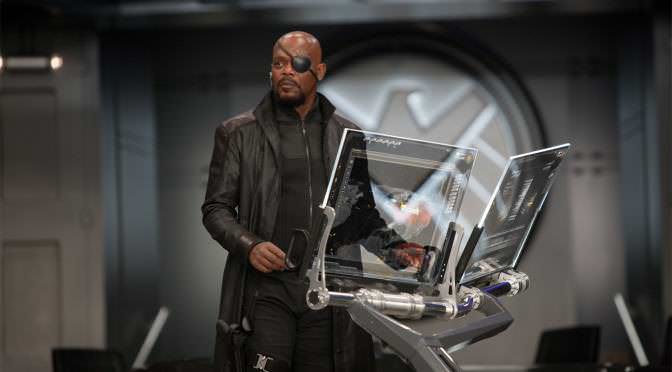
James: This movie is VERY GOOD. It’s easily one of my favourites that Marvel has made, and despite some weird script problems that pop up in relatively minor situations, it earns that honour almost entirely because they cast the title character one hundred percent perffectly. Like, this is Christopher Reeves-level casting greatness.
Scott: Cap is charming in a different way from other characters Evans has played: earnest, but likable, quippy with his friends but not really a comedian. He nails that “greatest generation” feel, quite honestly, and the whole movie is steeped in a warm retro glaze without feeling dumbly nostalgic or cutely experimental with the genre. The plot is solid enough and the cast is great, but this is the Marvel movie that nailed “tone” most perfectly since the first IRON MAN.
James: Quite simply, Evans is spectacular at playing the kind of guy who would be chosen for greatness because he represented the best in us. And that’s maybe the hardest type of movie hero casting to do.
Scott: There’s a quiet nobility that embodies the best of what America likes to think about itself, and we all do really.
James: It makes me very glad that although elements of the MCU are taken from the Ultimate universe in the comics, that they decided to go for a more classic representation of Cap-as-our-best-qualities instead of Mark Millar’s grumpy racist in The Ultimates, something that will go down as one of Millar’s worst crimes against media.
The movie also has great performances by Hayley Atwell, Toby Jones and Stanley Tucci, aka The Tooch, to anchor it.
Scott: And Sebastian Stan!
James: There are a few times where it veers into being a little too formulaic against its better instincts, but it works overall because it’s populated with interesting characters portrayed by the right actors.
Scott: And those moments disappear as quickly as they appear, the movie is very light on its feet and generous with the action. Overall, this is a 100% enjoyable movie!
James: Joe Johnston: a good director for it!
Scott: Next time out: If we loved five individual Marvel movies, surely we will love a movie with all of them together FIVE TIMES as much! It’s MARVEL’S THE AVENGERS! Definitely a movie that totally holds up right??
James: We won’t have an unpopular opinion about it at all!
Scott: Yay!!
James: jk y’all we’re gonna kill your sacred cow xoxoxo
