
When I wrote about Marvel’s 1872, the character of Red Wolf and the message sent by his costume in the All New, All Different Marvel promotional image, the line from Marvel afterward was pretty easy to parse. Editor-in-Chief Axel Alonso defended the image due to 1872’s old west setting, and encouraged people to wait for the book itself to judge it. Editor and Senior Vice President of Publishing Tom Brevoort was more direct, saying that instead of “judging wildly from a bit of promotional art,” people should “read the story” instead. And while I think “tell people to give us money before we’ll engage in dialogue” isn’t necessarily a great response to that kind of thing, I took them up on it. I waited. 1872 #1 came out this week, and I read it.
So let’s have that dialogue.
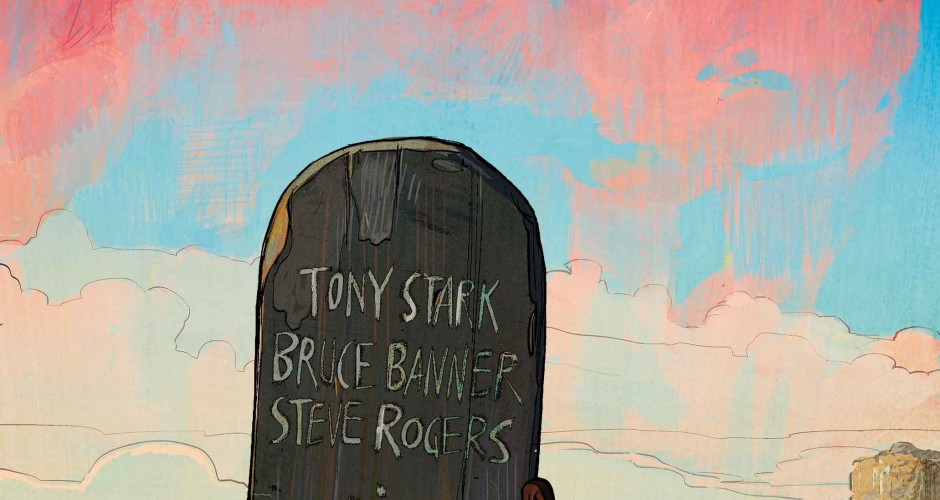
First off, the book isn’t as bad as it could have been, and I don’t mean that to sound like damning by faint praise. Nik Virella’s art is beautiful, with great body language, facial expressions and wide, colourful vistas of the American southwest. The plot, about Sheriff Steve Rogers trying to bring law to a corrupt western town run by Wilson Fisk, is a fun spin on a standard Western that I think wisely hews closely to the setting without bringing in the larger setting of Battleworld and Secret Wars. I think there was a possibility for this book to be truly great, and unfortunately it’s weighed down by the pseudo-prominent role Red Wolf plays in the first issue.
And it’s not like there’s not some stuff to like about that representation, either! I’m absolutely up for the character’s impetus for inclusion in the story being that he was about to blow up a dam because of how it’s devastated the Native American community’s home. That’s just historical fact, and I appreciate that Gerry Duggan made that Red Wolf’s motivation. But unfortunately, this isn’t the focus of the issue. In fact, it doesn’t even happen on the page; Red Wolf shows up silently on the page, and then the next time you see him, he’s been lynched and the action for it is explained instead of being shown. Right from the start, Red Wolf loses a significant portion of his agency. He’s put in jail by Steve Rogers, who insists that he deserves protection under the law and that mob justice is wrong… but then stays there for the rest of the issue, relegated to being Steve’s clipped English-speaking, stoic kinda-sidekick who insults the “stupid white man” for standing up for justice instead of saving himself when things inevitably go sideways.
There’s a kernel of a good story here – Red Wolf as a principled activist standing up for what he believes is right – that gets largely subdued by the execution, where that motivation takes a backseat to the consequences for the white, male lead. This obviously isn’t going to be the situation for the entire series, and Red Wolf will definitely get out of jail and hopefully become a more active participant (after all, he’s on the promotional art for the post-Secret Wars status quo), but the choices of first issue frame the rest of the series, and right now that framing is “Steve Rogers and Tony Stark matter.”
A big part of this choice is likely to keep an air of mystery around Red Wolf as he’s introduced, an assumption that I think is fair considering the only descriptor for the character in the issue’s solicitation was “mysterious,” and to build up his story and importance gradually. That’s a good intent, but along the way, it plays into a lot of existing tropes in the western genre about aboriginal people as separate, unknown and mysterious. It maintains the still pervasive cultural narrative of Native Americans as the Other, instead of being participants in the development of a continent. I sincerely doubt this was deliberate – Duggan seems like a thoughtful, talented writer with good intentions – but I can’t help but think the character would have been better served by, at the very minimum, having the one thing he does in the issue actually happen on the page. As it stands, the issue feels like a focus on future reveals having unfortunate connotations in the present.
The issue suffers from this collision of intent and execution in other places. As Aaron Long and Cameron Williams have noted, the issue features racial slurs directed at Red Wolf, and while they are uttered by the villains, it’s still wholly unnecessary, an instance of doing something just to show how bad someone is. Do I need to see someone call one of the heroes a redskin to know he’s a bad guy? Context cues, man. Context cues. It’s the same thing with a violent lynching shown on-panel. Would these let’s-show-ems have been used with another group? I would hope not, because when not used well, they reproduce the violence of the images without offering the appropriate nuance or subversion. I just wanted to read a comic with an aboriginal character, I didn’t particularly want or need to see him violently oppressed and jailed along the way. That’s called real life for far too many aboriginal people, and it’s a jarring intrusion into a comic about universes smashing together to make a giant continent of parallel worlds ruled by a wizard in a metal mask and policed by a police force of Norse gods who might be animals or space horses.
Similarly – and I can’t stress enough how much I think this is completely accidental and not the intent of Duggan, Virella or Marvel – 1872 #1 is a comic where Captain America puts an aboriginal man in jail for standing up for his people, and then tells him that his badge represents law and order triumphing over “savagery.” Absolutely accidental subtext, but even more unfortunate, and most shocking of all is that no one in the line of production decided that a white hero using the word “savagery” in conversation with an indigenous person needed a second take. And as accidentally unfortunate as it is, it kind of sums up the representation of Red Wolf in this first issue. It’s a book featuring an aboriginal character who’s only currently useful as much as showing the baseline amount of humanity towards him has violent repercussions for a more important, white character. He’s openly disdainful of Captain America’s values of justice and the law, which sends a weird message instead of having him be openly heroic, and he spends the entire issue being Tonto Behind Bars, down to the clipped English. A few different decisions, like showing his act of political dissent, having him spend less time in jail and taking out the slurs, could have made this issue very different and a lot more progressive. It’s not enough just to show up.
When I first talked about Red Wolf and 1872, I said that the stereotypical, historically inaccurate costume would need the greatest script in the world to make up for it. Instead, the book has a well-meaning script that accidentally invokes the familiar problems that representations of aboriginal people in media have always contained, that unnecessarily replicates traditional depictions and real life violence without offering much in the way of a new spin, subversion or even sensitivity to its subject matter.
Honestly, I wasn’t even going to write this, because I’m kind of sick of thinking about it, and I could just be rereading Negative Space #1 or Justice League United #11, both of which feature much better aboriginal representation and came out in the same week. But Marvel basically openly challenged me to. When the first imagery for the book went up, Marvel’s response, in varying tones, was to wait for the comic because the promotional images didn’t tell the whole story. Now I’ve read 1872 #1, and I can imagine the responses to follow: wait for Issue #2! Wait for the end! Wait for All New, All Different Marvel! At what point do the goalposts stop moving? When do I have to stop waiting for things to improve?
